
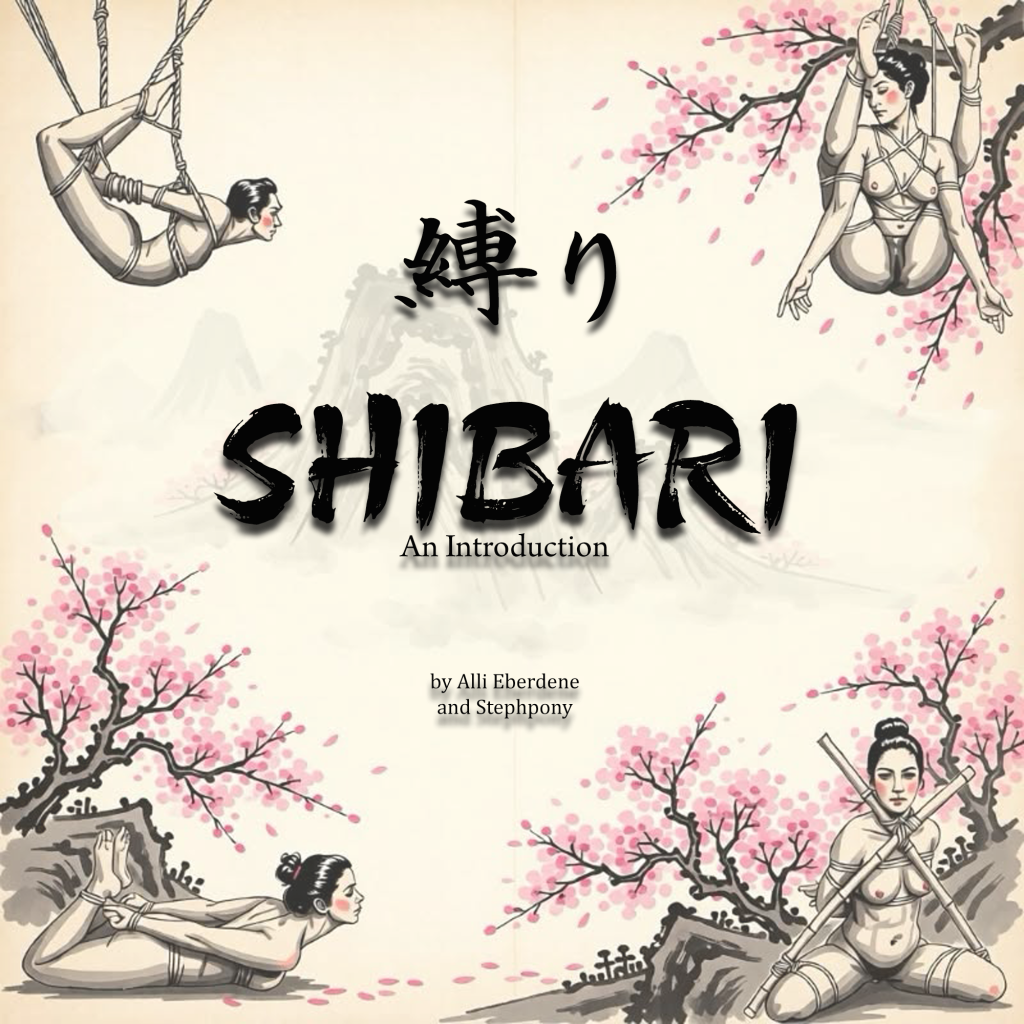
Welcome to Blackwater Shibari — a visual art experience and educational introduction to the art and experience of erotic Shibari. This webpage is a companion to the in-world exhibit in Second Life at the Blackwater Gallery, which you can visit here.
Please use the menu below to navigate through the exhibit, and please enjoy!

Table of Contents
- What is Shibari?
- How this Guide Works
- The Basic Ties
- Floor Ties
- Suspensions
- The Art of Shibari
- Shibari in Second Life
- Safety Considerations
- Some Final Thoughts
- Disclaimer Stuff
What is Shibari?
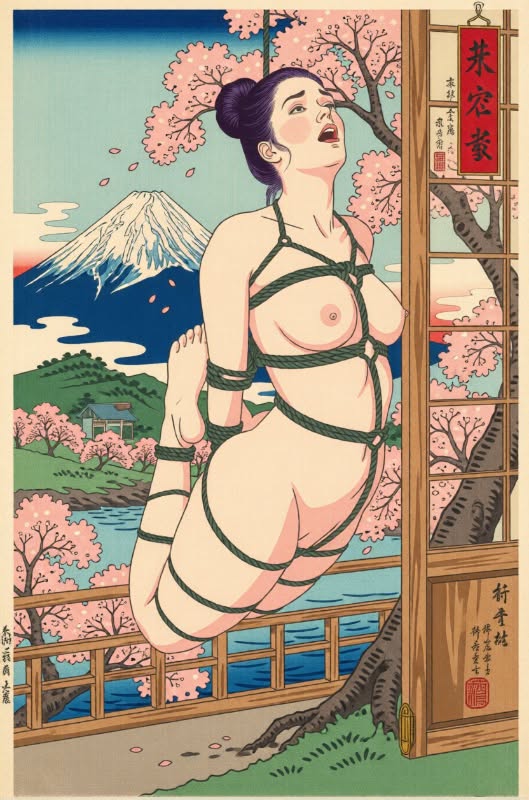
Shibari is both an art form involving traditional decorative rope bondage, and a physical practice involving aspects of bondage and sadomasochism (BDSM).
First, shibari is an art form, with a heavy focus on aesthetics and form. It is therefore a little different from other types of BDSM, which focus more on restraint and sexual appeal. Shibari is obviously erotic, but its focus on aesthetics and visual appeal make it truly artistic and not necessarily sexual at all.
Second, shibari is a physical practice. Shibari can be practiced solo, but is usually done with a partner. As a physical practice, shibari is a very specific flavor of BDSM that, for some, is a form of foreplay and an expression of sexual intimacy.
For others, shibari is more of an artistic exercise, like painting or sculpting. As an aesthetic or a physical practice, shibari uses rope to restrain a person in a specific pose — I like to think of shibari as “bondage yoga.”
Like most things in life, shibari is what you make of it. It can be sexual, erotic, intimate, artistic, or all the above. The most important thing is to have fun — and to allow shibari to be whatever you want it to be for you.
The History of Shibari
Shibari originated in Japan. Between 1185 and 1868, Japan was a feudal state ruled by regional warlords and governed by a strict social caste system. The legendary samurai of the time developed hojojitsu, a system for using rope to bind prisoners and criminals. Each knot and rope pattern indicated the capitive’s social class, the degree of guilt and the severity of the crime. Hojojitsu was considered its own martial art form.
In the late 1800s, as the feudal system eroded, Japanese kabuki theater adopted the rope bindings as theatrical props to tell stories and to entertain. The rope bindings became safer, more visually alluring and more erotic. Shibari — erotic and artistic rope bondage — was born.
By the mid-20th century, Japanese rope binding had evolved further into its own form of artistic and erotic expression. The word shibari means “to tie or bind.” The word kinbaku, meaning “tight binding,” has an erotic connotation in Japanese and is more accurate. However, outside Japan, the word shibari has become synonymous with consensual, erotic, artistic rope bondage of all forms. Shibari is practiced today worldwide as a form of erotic and artistic expression.
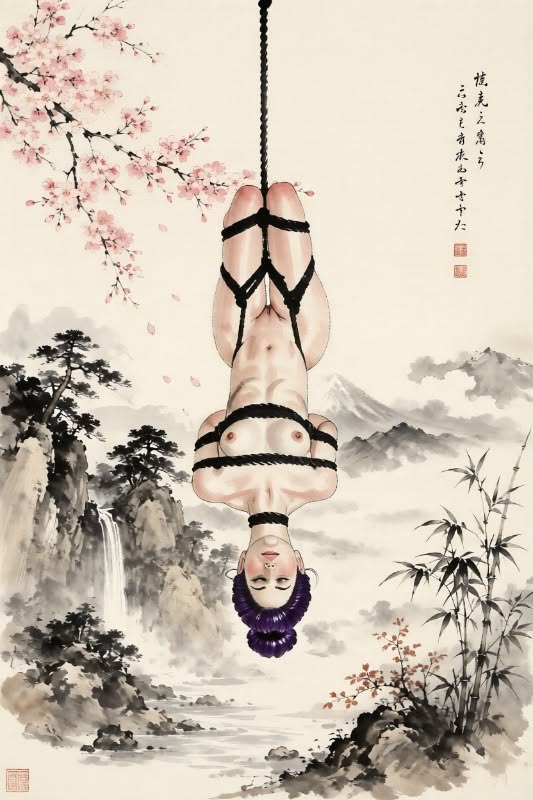
Glossary of Shibari Terms
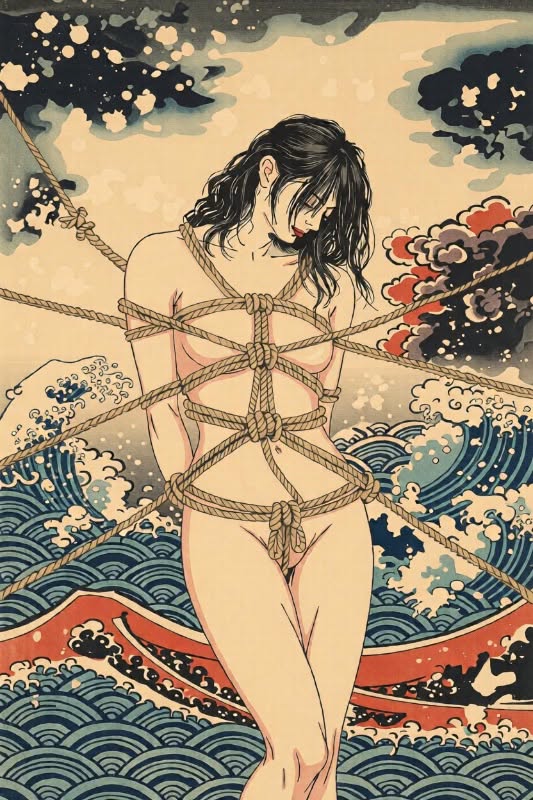
Shibari means to tie or bind. In Japanese, the word shibari is not erotic. (For example, shibari can involve tying your shoelaces.). Outside of Japan, shibari commonly means rope bondage.
Kinbaku means “tight binding.” It has an erotic connotation and is interchangeable with shibari.
Kinbakushi, or bakushi for short, means “rope master.” This is the “top” or the person who is doing the tying.
Ukete literally means “receiving hand.” The ukete is the “bottom,” the rope model or “rope bunny.” In shibari, the ukete is the person who is being tied up.
Asiatsu means “greeting” and refers to simple warm-up exercises that set the mood for shibari.
Semewana means “tormenting rope” and refers to rope, or rope ties, that are intentionally uncomfortable or even painful.
Jibaku means self-tying. It is a form of shibari in which the rope model uses rope to tie himself or herself.
Kokoro refers to a mind-body connection that can be achieved through exercise meditation, and even shibari.
Newaza and tokowaza are interchangeable terms that both mean “floor tying,” a form of shibari that does not involve any suspension of the rope model.
How This Guide Works
This guide is two things. First, it is a celebration of the aesthetic and artistic beauty of shibari. Second, it is a mechanical introduction to shibari itself.
Start with the basic ties below for the arms, legs and body. Think of these as your basic ingredients.
Next, we will combine the basic ingredients into different poses and positions, starting with the nawaza (the ground ties) and then moving on the tsuris (the suspensions). No matter how complex a shibari pose may appear at first glance, we will see that every pose can be understood as a combination of the basic ingredients.
Along the way, we will look at some art and offer some thoughts and musings on the world of shibari.
The Basic Ties
Hand and Arm Ties
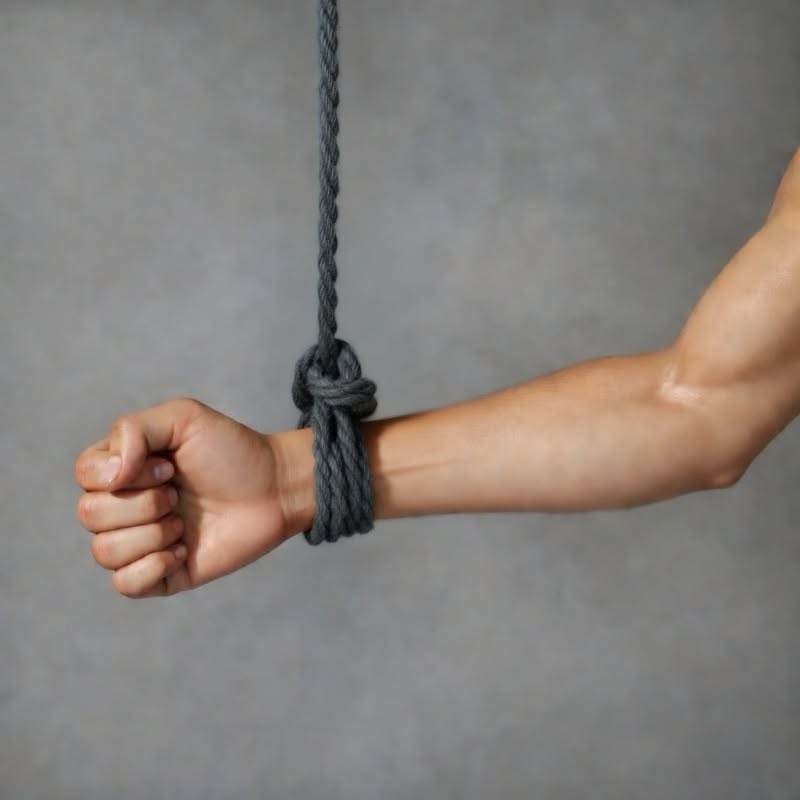
Katate Kubi
(Single-Column Wrist Tie)
片手首縛り
In shibari, a “column” refers to a limb (an arm, leg, etc.) The single column tie is the most ubiquitous tie in shibari and also the easiest to learn.
There are many varieties, the most popular being the bowline and the lark’s head. (See more in the “knots” section below.)
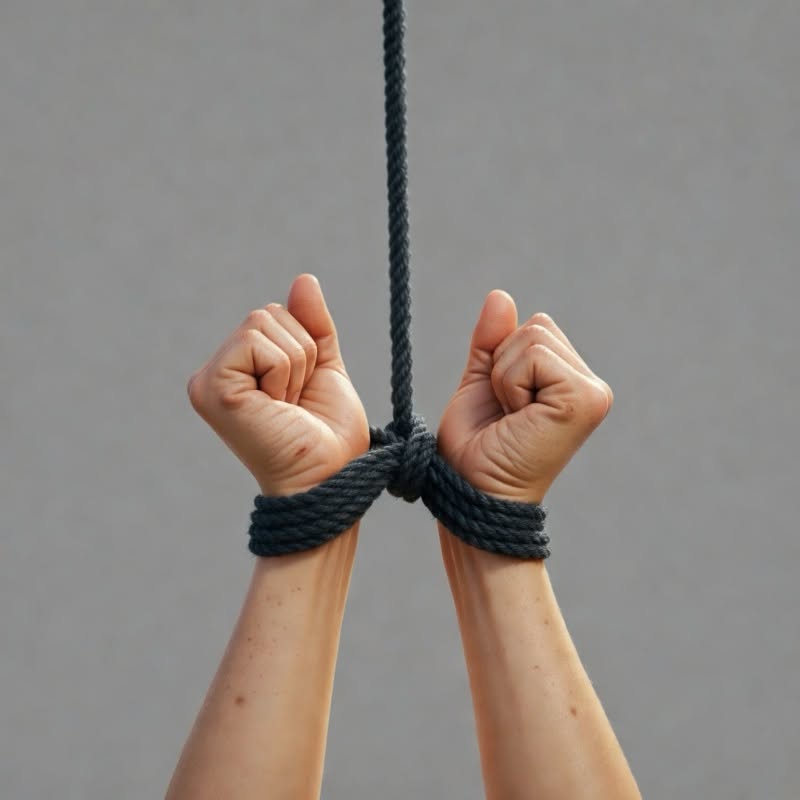
Ryoute Kubi
(Double-Column Wrist Tie)
両手首縛り
The wrists are tied together with the end of the rope (called the “nawajiri”) leading away from the wrists. The nawajiri allows the wrists to be tied to something else.
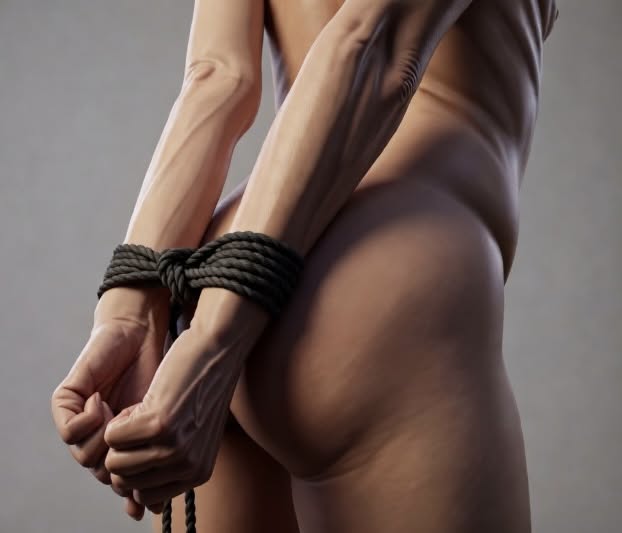
Ushiro Te
(Hands Behind the Back)
後ろ手縛り
Also known as a “handcuff tie,” this is a double column tie in which the wrists are tied together behind the back, either with or without a nawajiri (the trailing end).
Teppo
(The Rifle Tie)
鉄砲 縛り
The arms are tied together behind the back in opposite directions (one arm up, the other down). The pose is intended to mimic the rifles worn on the shoulders of Portuguese soldiers who visited Japan in the late 1800s.
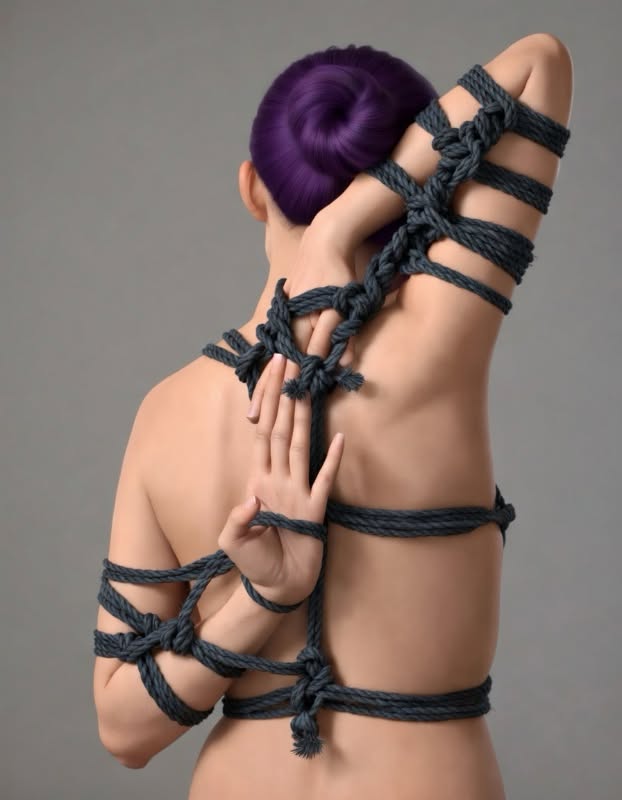
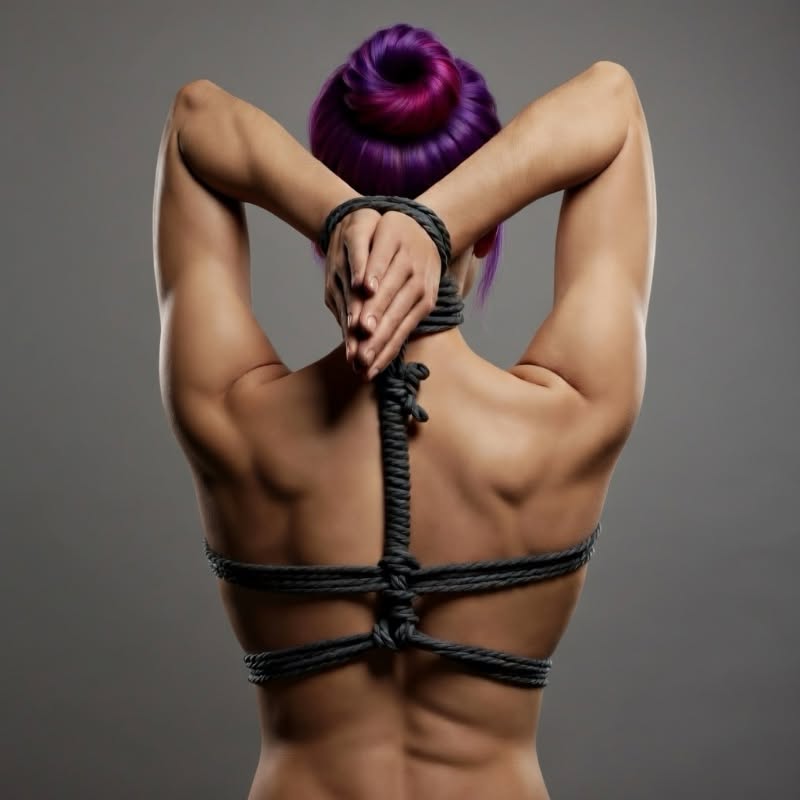
Kouto Ushiro Te
(Bunny Ears)
後頭後手縛
The wrists are tied together behind the neck, the elbows pointed up. The resulting “bunny ears” are formed by the shape of the elbows.
Takate Kote
(Box Tie)
高手小手
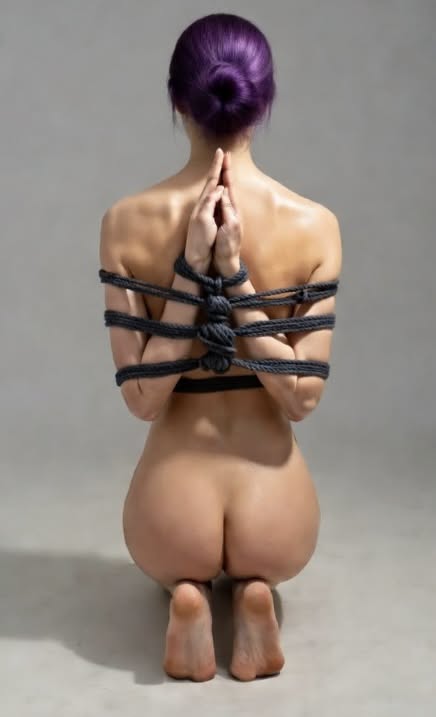
The takate kote (also known as a box tie, or by its abbreviation “TK,” or a “gote”) is a foundational shibari tie.
There are many variations of the gote, but in all of them, the upper body is wrapped in a rope harness that constrains the upper arms against the chest, creating a box shape.
The wrists are usually tied together in the back, though in some variations the wrists are constrained in the front of the body, or at the sides.
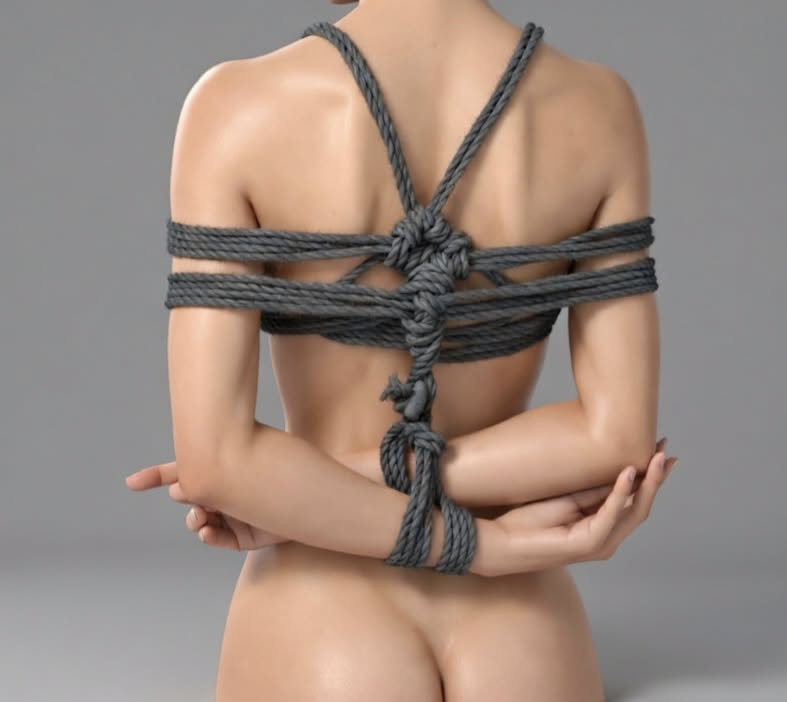
This is another variation of the takate kote…
… and yet another variation of the takate kote!
You will find that there are dozens, if not hundreds, of ways to do most ties in shibari. Find the style that is most pleasing to you. As long as it’s safe and functional, your version of any tie is the “correct” tie for you.
Foot and Leg Ties
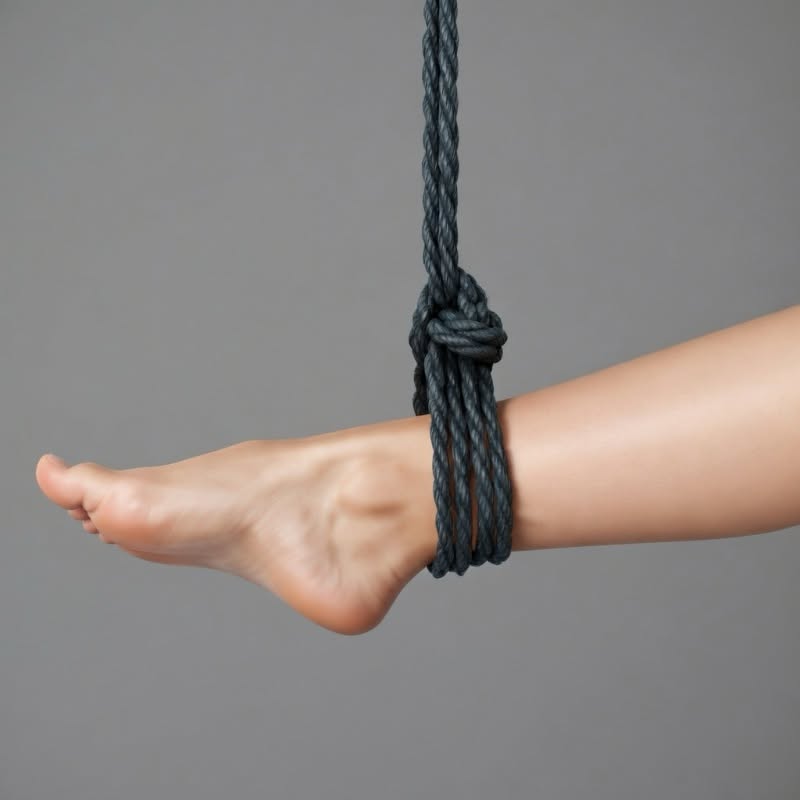
Ashikubi Ichirin
(Single Column Ankle Tie)
足首一輪縛り
This is a single column tie of one ankle, the rope end (the nawajiri) leading away for further connection to something else, such as in suspension.
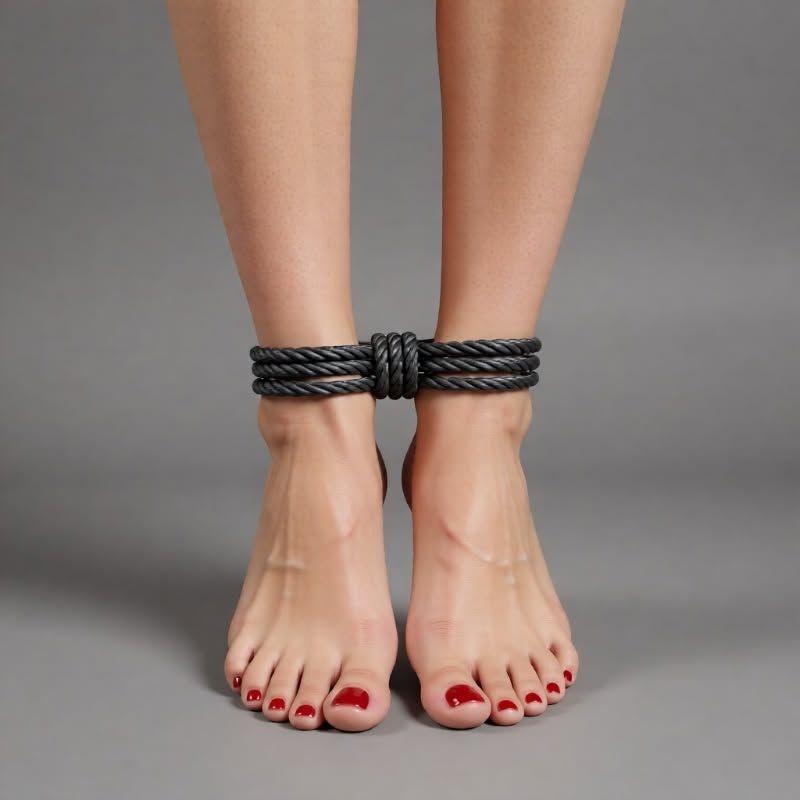
Ashikubi Niju Wa
(Double Column Ankle Tie)
足首二重輪縛り
The ankles are tied together, either with or without a nawajiri.
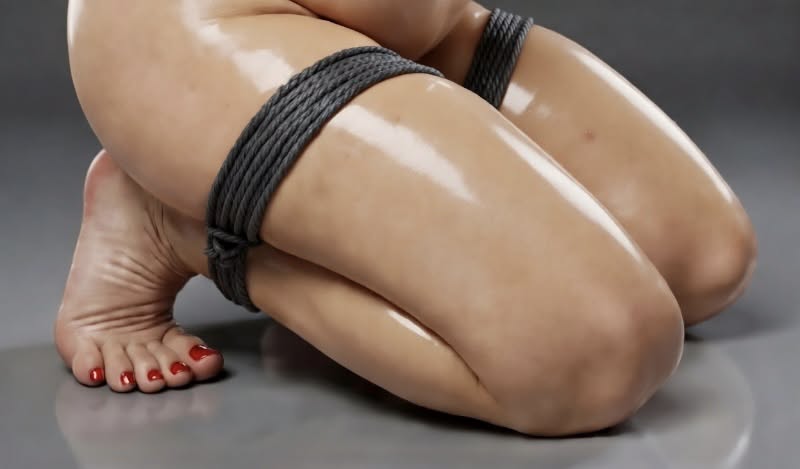
Gama
(Frog Tie)
蛙縛り
The ankles are tied to the thighs. The result is the rope model resembles a sitting frog with folded legs.
Futomomo
(Folded Leg Tie)
太腿縛り
Sometimes known by its nickname “futo,” this tie binds the leg in a folded shape. There are many variations of the futo, ranging from simple to complex and decorative.
Note that the gama (the frog tie) above is simply a futomomo for both legs.
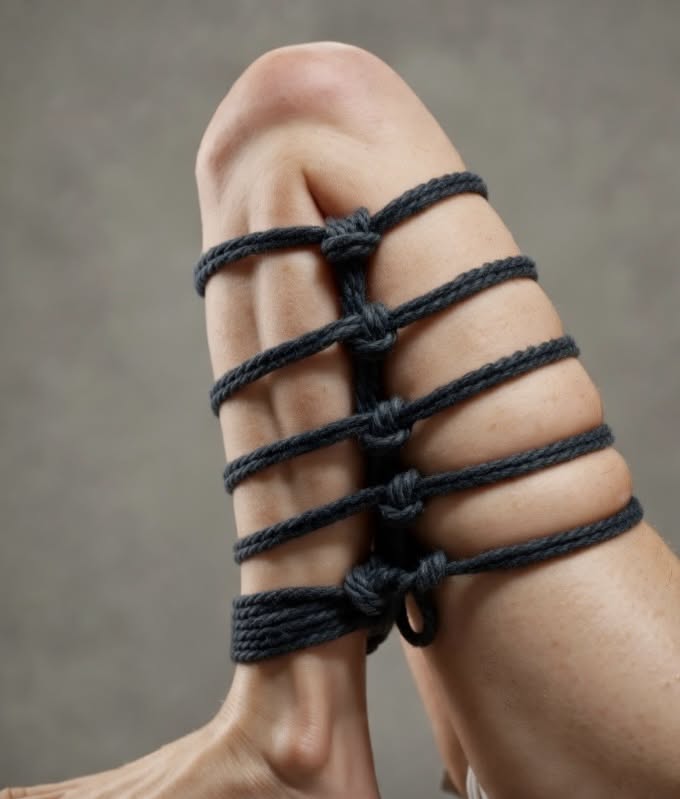
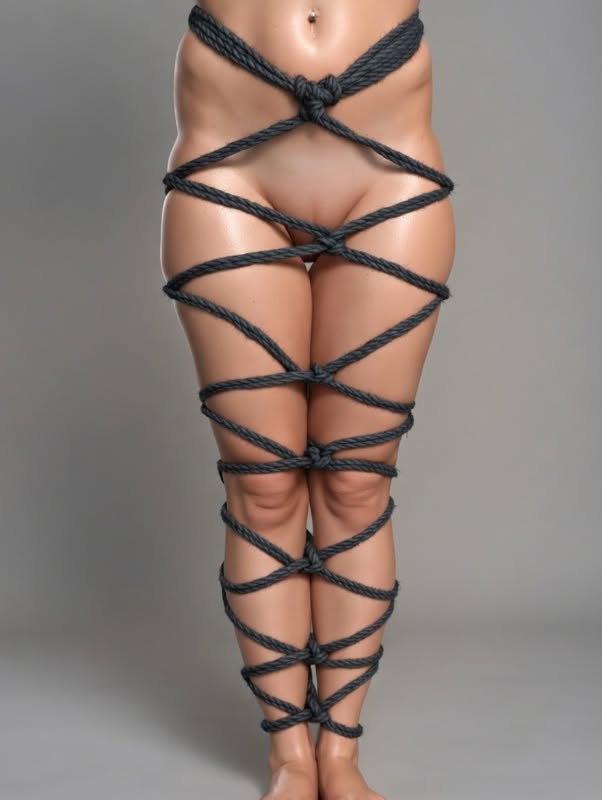
Ryoashi Gattai Ichimonji
(Mermaid Tie)
両足合体一文字
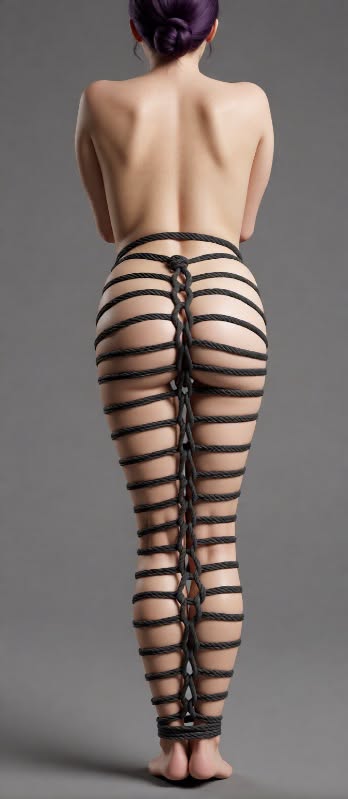
The legs are tied together in an extended position, creating a single uniform “tail” resembling a mermaid. Like most things in shibari, there are almost unlimited variations of the mermaid tie.
This is another, and very elaborate, version of the mermaid tie.
Body Ties
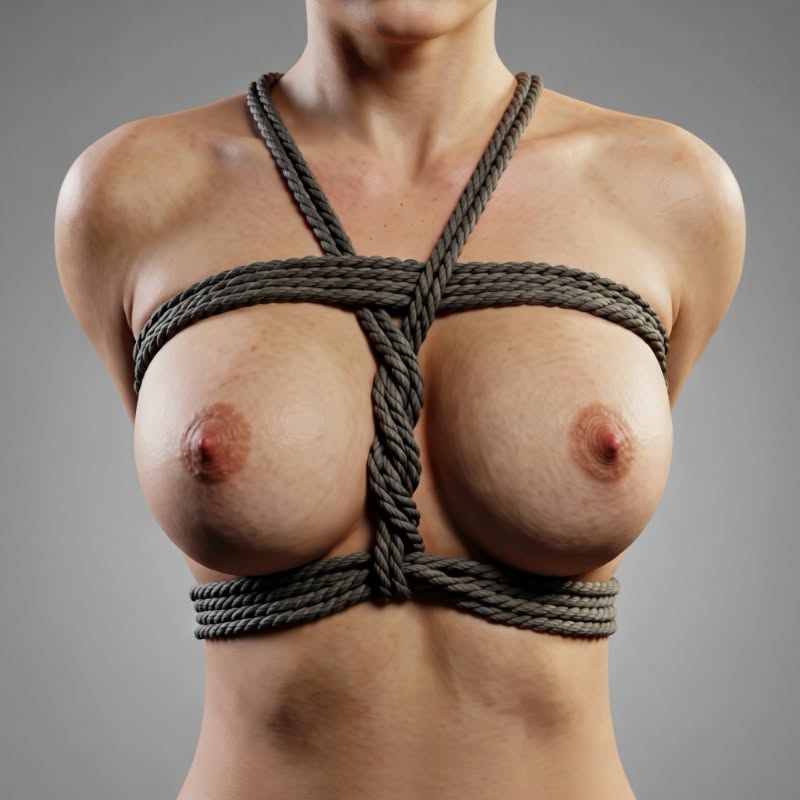
Shinju
(Chest Harness)
真珠縛り
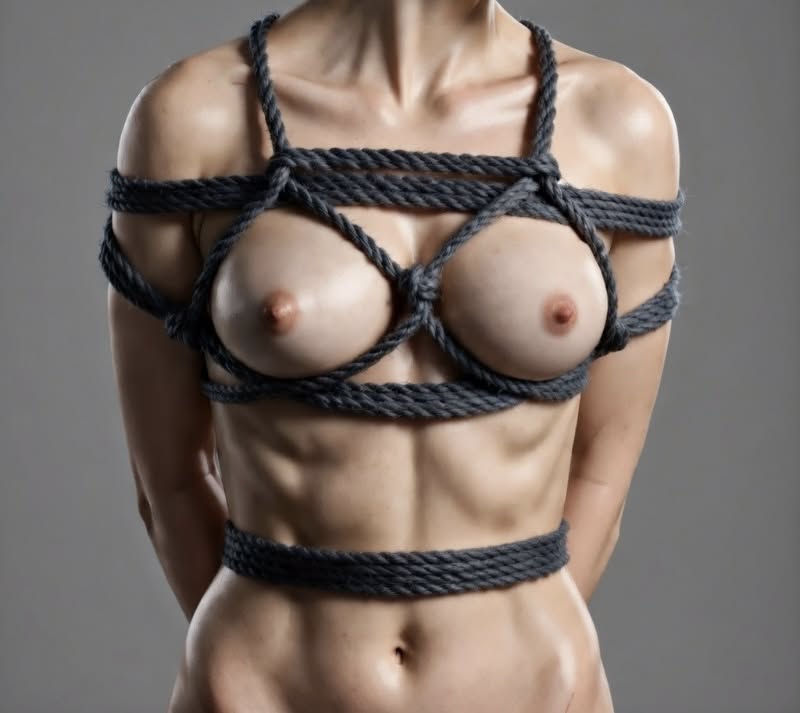
The shinju is a chest harness. Sometimes called a “rope bra,” the term “shinju” literally means “pearls,” a euphemism for the breasts and nipples. There are many variations of the shinju. The emphasis of any shinju is a display of the breasts.
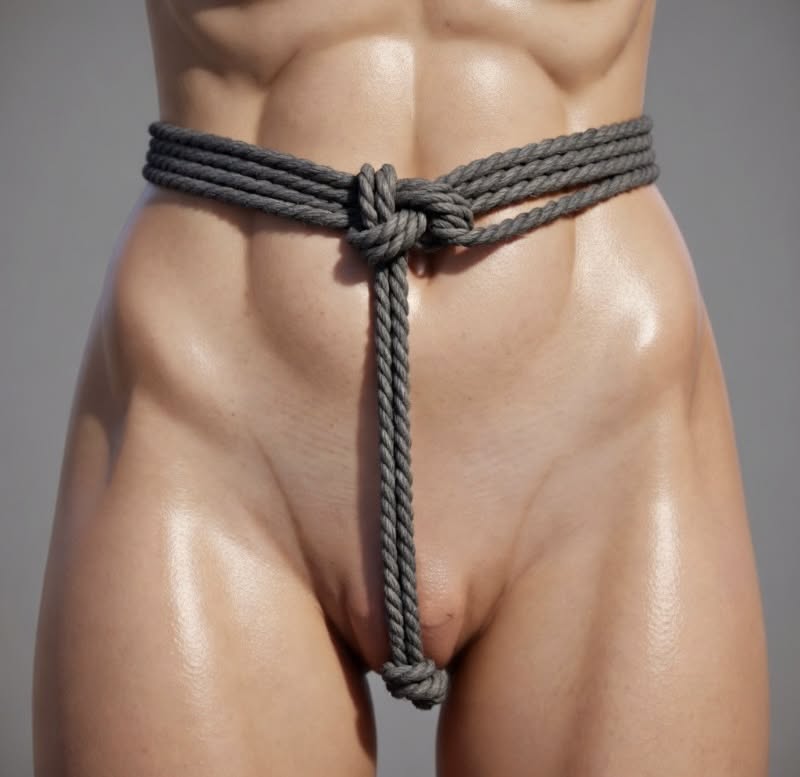
Mata Nawa
(Crotch Rope)
股縄縛り
A rope tied around the waist and through the legs, the mata nawa is essentially rope underpants. Note how in this version of the mata nawa, a knot in the rope — a “pleasure knot” — has been placed in a strategic position…
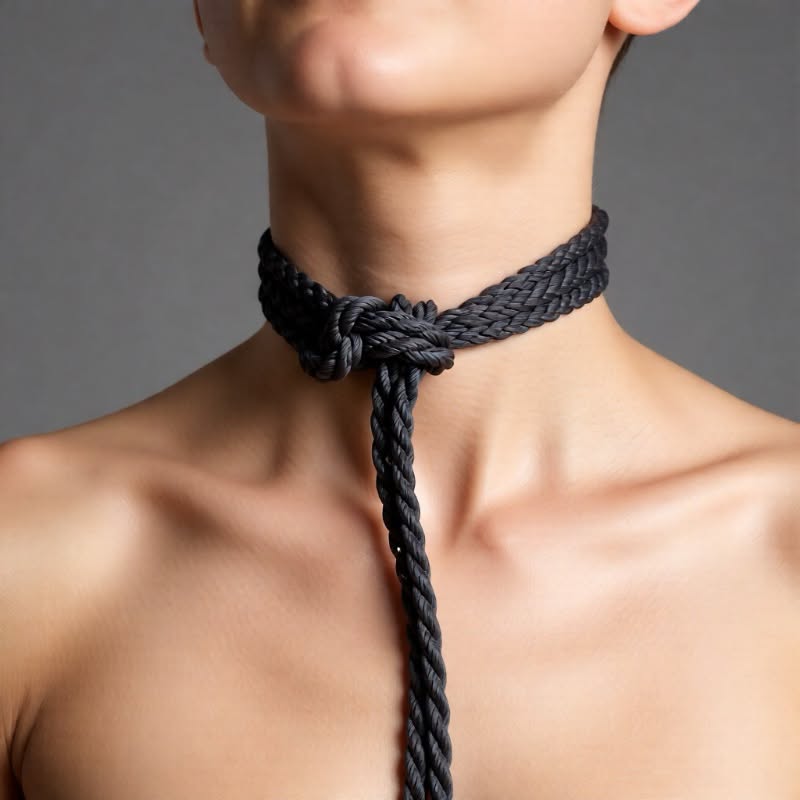
Kubi
(Neck / Collar Tie)
首縛り
A single column tie around the neck. Like all things involving the neck, great care must be taken to ensure safety.
The kubi can be used in connection with asiatsu, a series of warm-up exercises that are both performative and erotic.
Agura
(Cross-Legged Tie)
胡坐縛り
The model is tied in a seated position with the legs crossed. This is a traditional hojojitsu position reinforcing the submission of the ukete, the rope bottom.

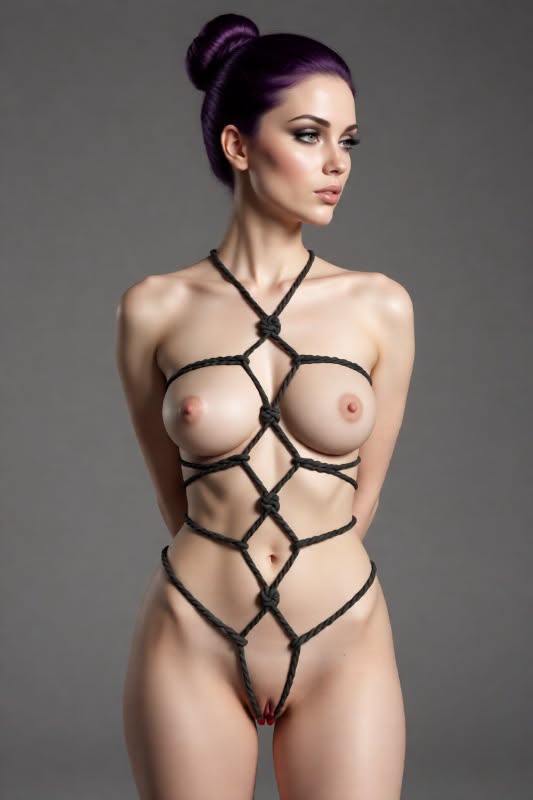
Karada
(Body Harness)
体縛り
The karada is a rope body harness. “Karada” literally means “body,” so any form of rope tied around the body is technically a karada.
The karada, with its million variations, is one of the best ways to introduce someone to shibari because it is generally unrestrictive and can be worn over clothing. The karada is also a great way to learn foundational ties and basic style.
In this version, for example, the rope is tied in a diamond pattern (called a “hishi”), a traditional and common shibari style.
Floor Ties
Now that we know the basic shibari ties for the arms, legs and body, we can start combining these ties into poses. Think of the basic ties as ingredients. We can now combine those ingredients to create recipes for poses.
When one thinks of shibari, images of models flying through the air may come to mind. However, all shibari starts on the ground. The interchangeable terms nawaza and tokowaza refer to “floor ties” that are practiced on the floor or a mat. These ground ties can later be turned into suspensions, but they’re also fun all by themselves.
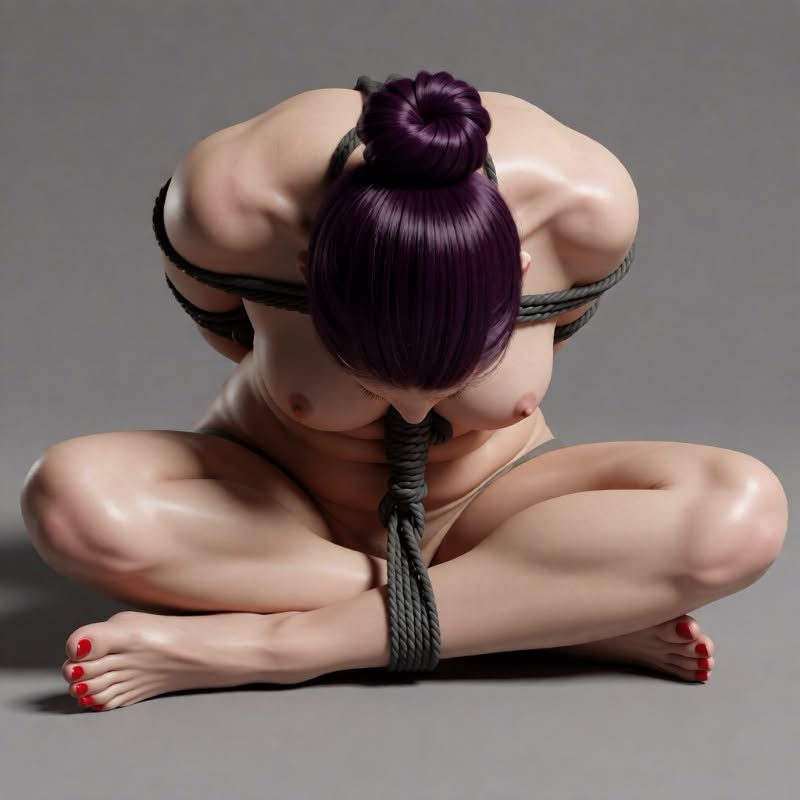
Ebi
(Shrimp Tie)
海老縛り
The model is in a seated position, the upper body tied to the lower, so that the model is “folded over,” resembling the curved body of a shrimp.
In this version, a takate kote on the upper body is connected to the ashikubi, the double-column ankle tie.
See how the basic ingredients are combined to create the pose.

Gyaku Ebi
(Hogtie)
逆海老縛り
The classic hogtie, in which the arms and legs are bound together behind the model’s back.
Again, see how this is just a combination of basic ingredients. The gyaku ebi is simply the connection of the ryoute kubi (the double-column wrist tie) to the ashikubi (the double-column ankle tie).
Kemono
(Beast Tie)
獣縛り
The word “kemono” means “animal” or “beast.” In this tie, the wrists and ankles are bound together (and sometimes also suspended), evoking a captured animal or beast.
Note how the kemono tie is essentially the opposite of the hogtie: Here, the double-column ties on the wrists and ankles are in the front, not the back.


Katasumuri
(Snail Tie)
蝸牛縛り
In this pose, the trailing end of a double-column wrist tie (the nawajiri) is pulled taut between the legs, promoting an exposure of the model’s hips and rear. The resulting curved position resembles a snail.
As you might gather, the snail tie may signal the commencement of other non-shibari activities…
Other Forms of Shibari
So far, we have been studying the most common form of shibari — using rope alone. However, there are other forms of shibari involving objects or props that we should talk about. This is art, so we are limited only by the imagination.
Hashira Shibari
(Pillar/Pole Shibari)
柱縛り
In hashira shibari, the model is tied to a pole or pillar.
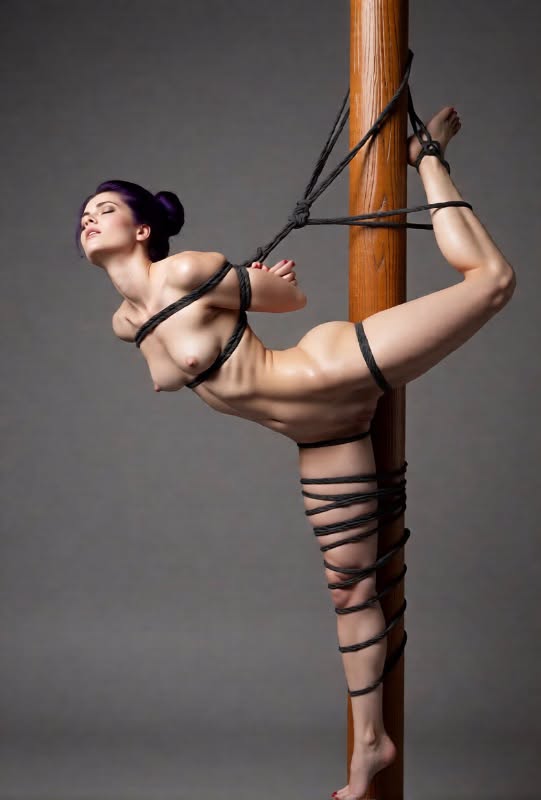
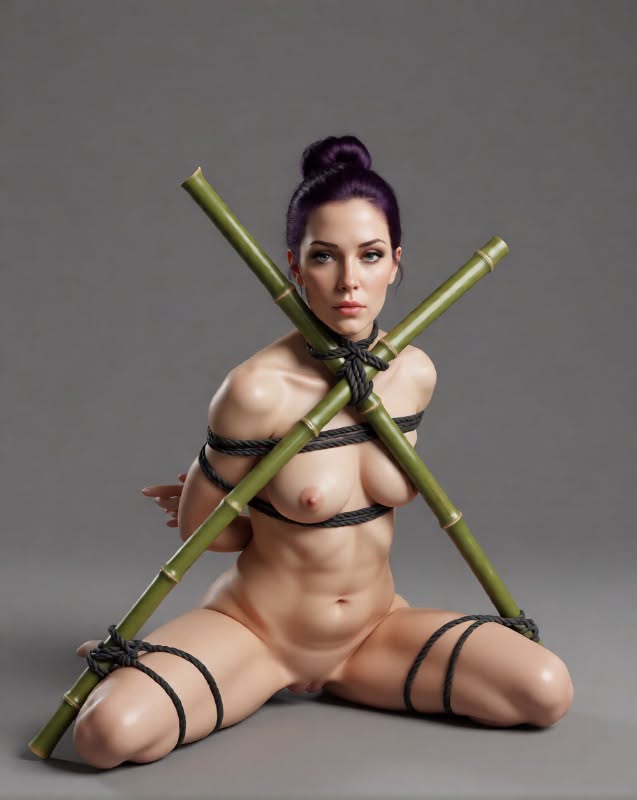
Bo Shibari
(Staff/Pole Shibari)
棒縛り
In bo shibari, a staff or pole, usually made of wood, is used as a prop. The pole is interwoven into the pose using rope.
Suspensions
It’s time to fly! In shibari, a suspension is called a “tsuri” or a “zuri” depending on the transliteration. These suspensions might look complicated, but they are just combinations of the basic ingredients we already know.
Tachi Tsuri
(Standing Suspension)
立ち吊り
In this basic suspension, the model is suspended upright in a standing position, with both feet on the floor. (A tiptoe pose is considered standing, as in the illustration.)
Here, the model is suspended by a takate kote (the box tie), one of the basic ingredients we learned about previously.

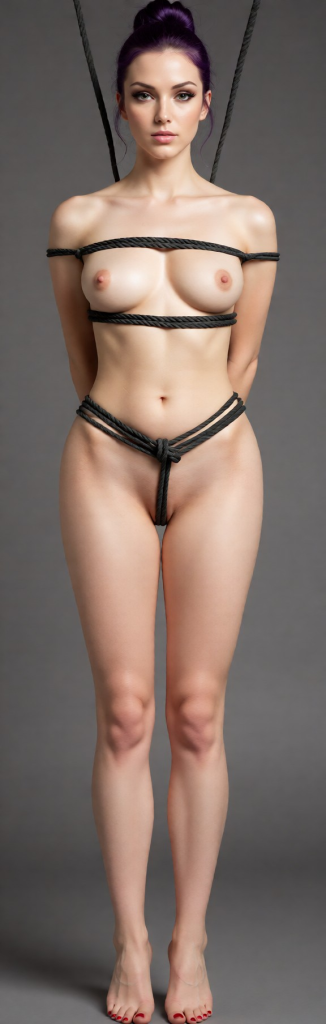
Here’s another tachi tsuri, a standing suspension with both feet on the ground. In this version, the model is suspended from a simple takate kote, and is also wearing a mata nawa (crotch rope).
Kataashi Age Tsuri
(One-Leg Suspension)
片足揚吊り
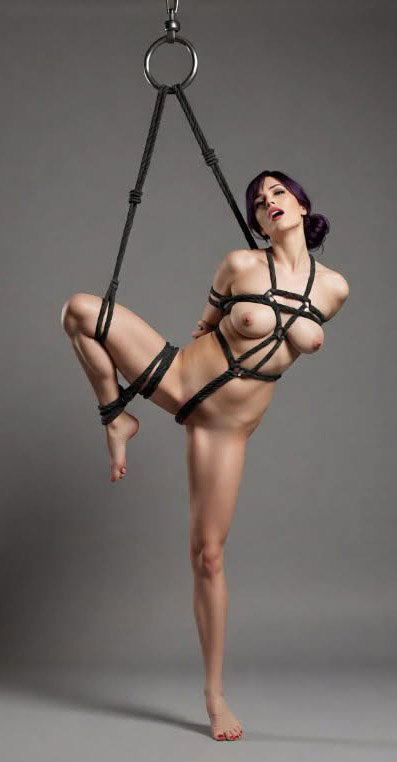
In this suspension, the model is suspended with one leg raised, the other on the ground.
The ingredients here are the takate kote on the upper body and a futomomo on the right leg, with a single column around the thigh. A mata nawa is added and woven into the rope harness just for fun.
Yoko Tsuri
(Side Suspension)
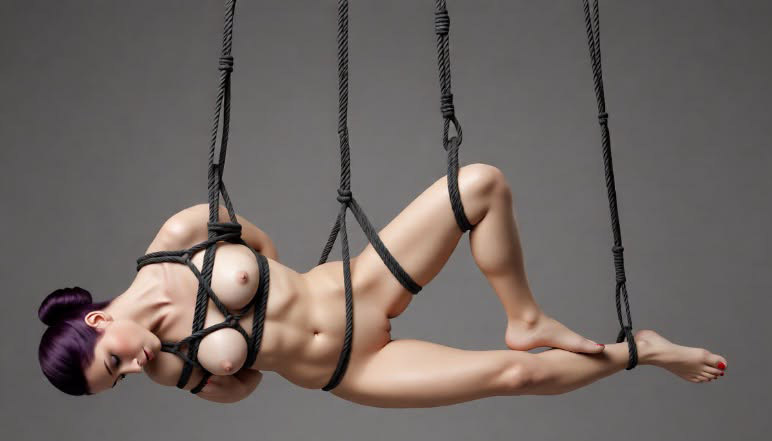
横吊り
The model is suspended in a side-facing position. Here, the model is in a takate kote, and single-column ties are added to the waist, thigh and ankle for support.
M-Ji Kaikyaku Tsuri
(M-Shaped Suspension)
M字開脚吊り
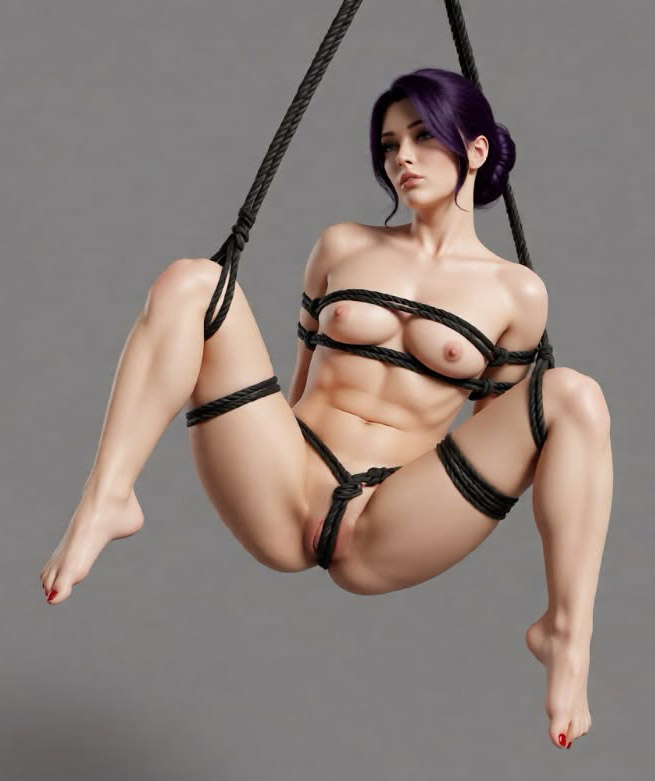
In this suspension, the model is upright, the legs partially folded and spread open. The result is an M-shape formed by the legs and hips.
The simple ingredients here are a takate kote on the upper body, and single-columns on the thighs. A mata nawa is added for fun.
Utsubuse Tsuri
(Face-Down Suspension)
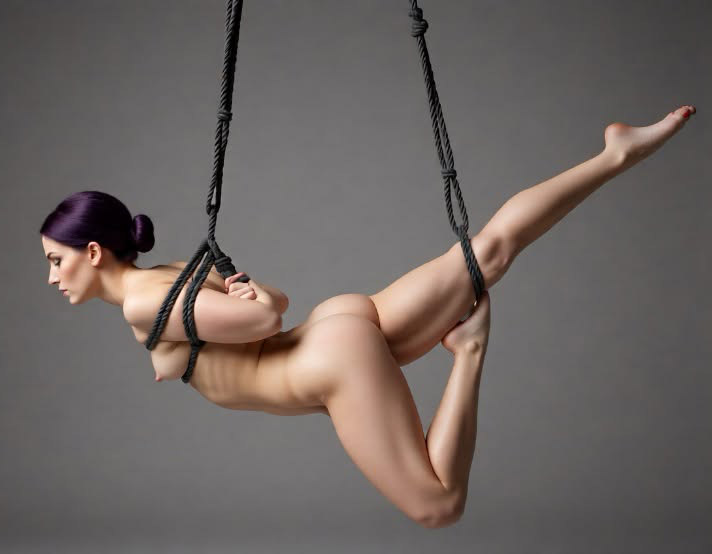
俯せ吊り
The model is suspended in a prone (face-down) position. Here, a takate kote is on the upper body and a single-column tie is used on the right thigh.
Aomoke Tsuri
(Face-Up Suspension)
仰向け吊り縛り
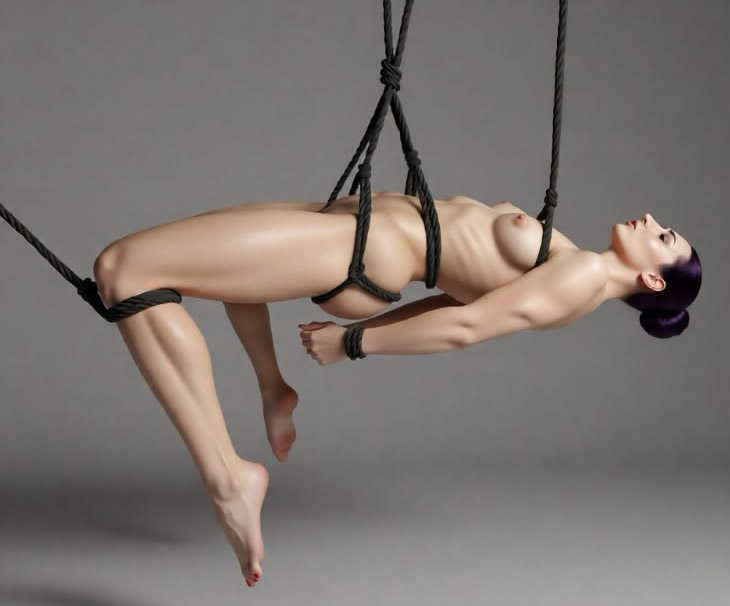
The aomoke tsuri is any suspension in which the model is supine (facing up).
In this version, the suspension is accomplished using a mata nawa on the lower body and a shinju on the upper body. A single column on the thigh is added for support, and the double-column wrist tie is added for fun.
Hashigata Tsuri
(Bridge Suspension)
橋型吊り
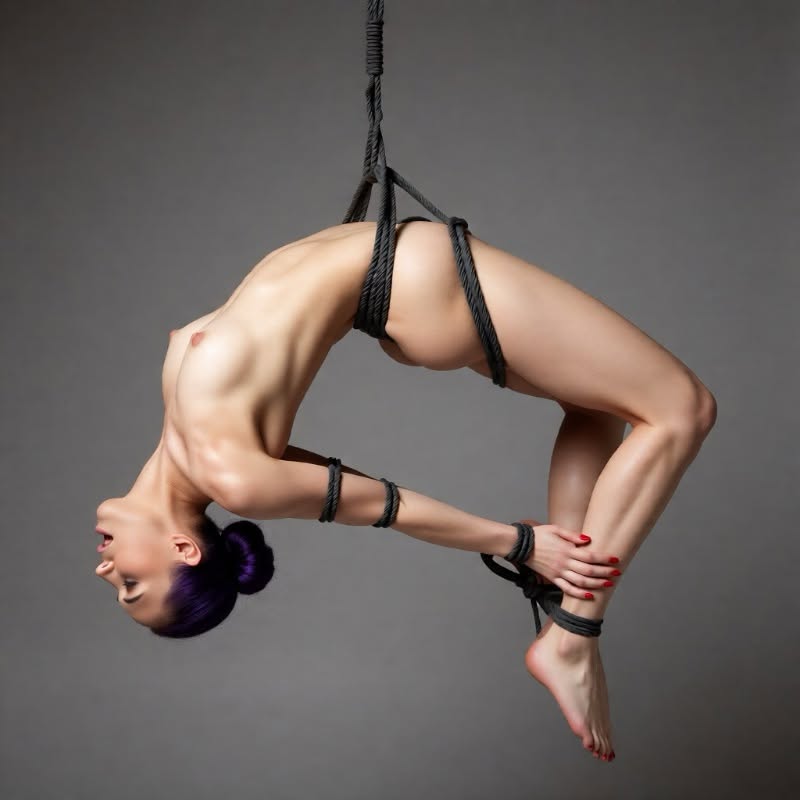
The word “hashigata” means “bridge.” In a bridge suspension, the model is suspended in a curve shape resembling a bridge.
In the illustration here, the model is facing up, but note that a hashigata pose may also be facing down. Therefore, this hashigata is also an aomoke tsuri (a face-up suspension).
The components here are a mata nawa on the lower body, and double-columns on the ankles and wrists to force the “bridge” shape.
Tanuki Tsuri
(Racoon Dog Suspension)
狸吊り
The word “tanuki” means the adorable Japanese racoon dog. In this suspension, the model takes the form of the captured, suspended animal.
Remember the kemono floor tie? This is the suspended version. Here, the wrists and ankles are suspended either in single or double columns. An excellent introduction to full suspension.
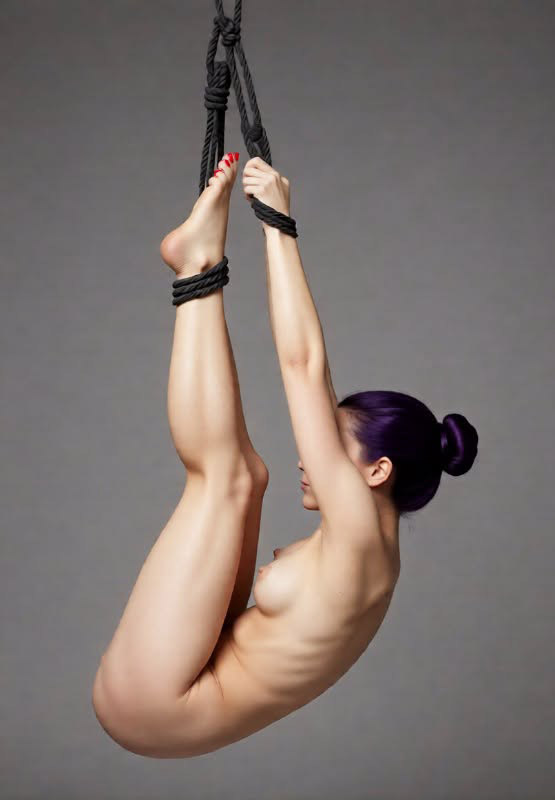
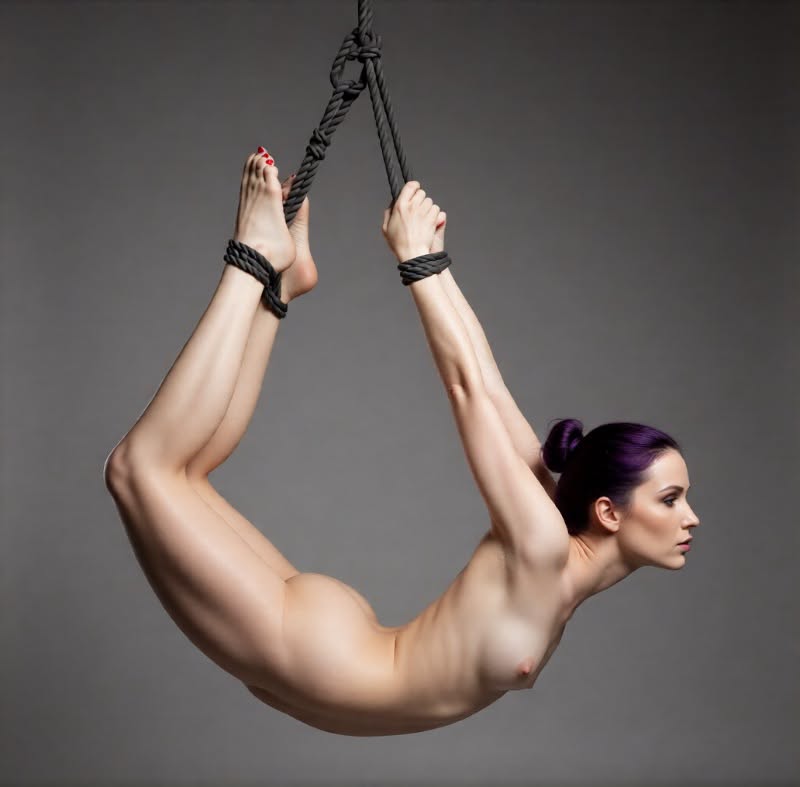
Another version of the tanuki tsuri. In the prior version, the model was supine (facing up). In this much more physically demanding version, the model is facing down.
Hikyaku Tsuri
(Running Man Suspension)
飛脚吊り
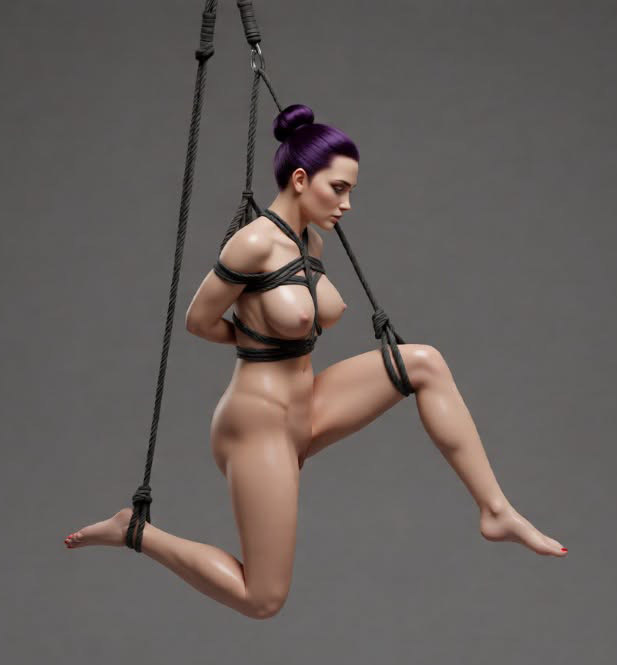
Hikyaku literally means “flying feet” in Japanese. In this suspension, the model is tied in an action pose, such as the iconic “running man” pose in the illustration.
The hikyaku is any action pose involving the illusion of movement of the feet (running, jumping, flying, etc.). In the version shown, the ingredients are a takate kote on the upper body and two single columns on the left thigh and right ankle for support.
Daruma Tsuri
(Daruma Suspension)
達磨釣り
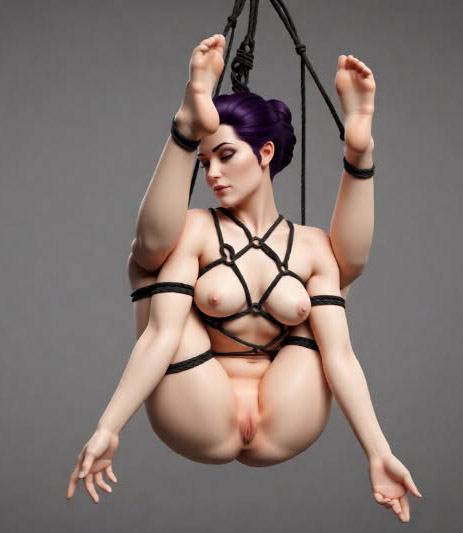
In this provocative tie, the model is suspended in a folded position, with the the legs behind the arms. The resulting “ball” shape of the model’s body evokes the traditional Japanese daruma doll.
Here, a takate kote is used for the upper body, and single columns are used on the thighs and ankles to accomplish both the folded shape and the suspension.
Sakasa Ebi
(Inverted Shrimp)
逆さ海老縛り
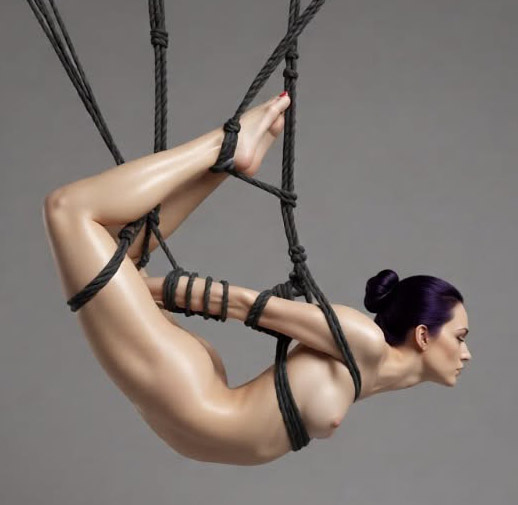
Remember the gyaku ebi floor tie? This is the suspended version. In this demanding suspension, the model is tied facing down, the back arched and the feet suspended above the head. The result is the curved shape of a swimming shrimp, and an iconic shibari suspension.
In the version shown, a takate kote is used on the upper body. Single or double-column ties are used on the ankles and additional single column ties are added on the thighs for support.
The Art of Shibari

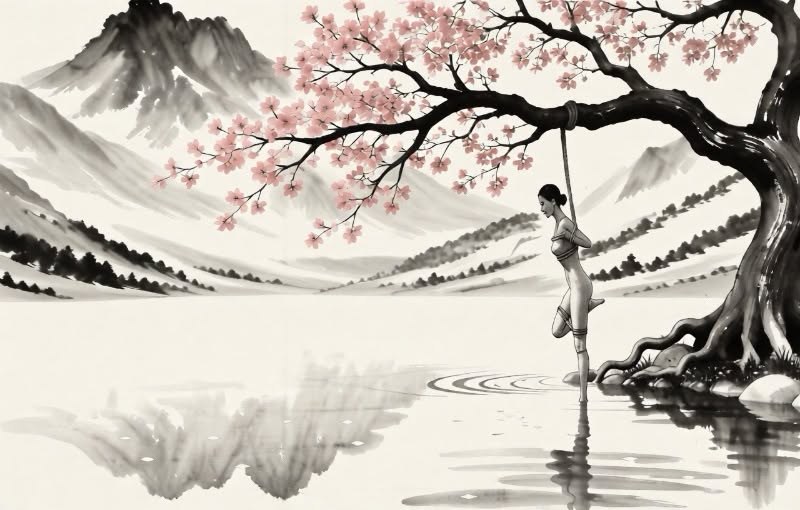
The Crane
鶴
Perched on one leg in the cool morning water, she surveys the pond, her wings folded at her sides and her other leg tucked under her body for warmth.
Japanese art, including shibari, is often inspired by nature. Many of the traditional shibari forms are named for animals — the shrimp, the frog, the snail, to name a few.
Here, our model is in a kataasha age tsuri (one-legged suspension). Her upper body is in takate kote and her left leg is in futomomo.
Combining these ingredients at home, we get a fun and beautiful suspension. Combining them at the edge of a pond, we get a crane.
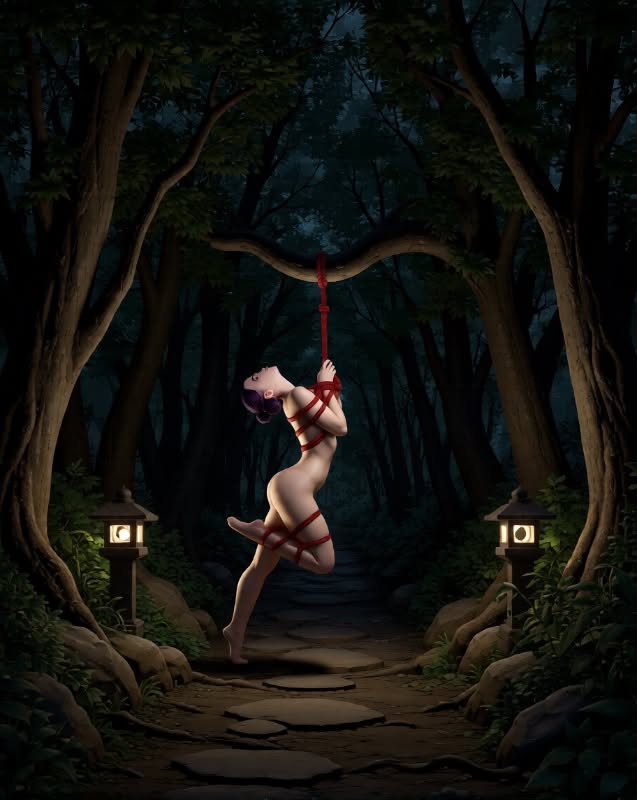
The Eagle
鷲
Deep in the forest, she is perched on a tree branch. She spots her prey. Her wings unfold, extending as she lurches forward into flight.
This is a tachi tsuri (standing suspension). Each leg is in futomomo and a series of eight single-columns are used to create the effect of the eagle’s flapping wings.


The Tiger
虎
A noise somewhere in the jungle. She turns and leaps, her powerful hind legs propelling her forward, her paws ready for the attack.
This is another tachi tsuri (standing suspension). The model is in takate kote and mata nawa. The wrists are either tied into the takate kote, or are separate single-columns.
Note how the use of color (orange) and props (the tail and the mask) help to tell a story that extends beyond mere rope.
The Flamingo
紅鶴
Wading in the warm water of the bay, her wings folded at her side, her graceful pink neck resting in its iconic curve as she hunts the shallows.
Our model is tip-toe in a kataasha age tsuri (one-legged suspension). Her left leg is in a futomomo and the suspension is accomplished using a karada and two single-column ties.

The Angel
天使
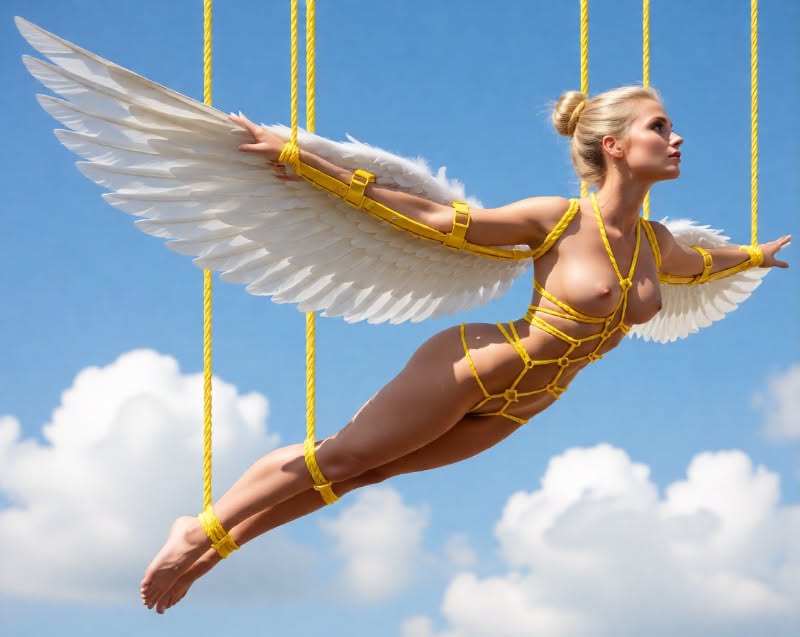
Majestic and immortal, she glides over the earth, surveying the mere mortals below.
This face down suspension (ustubuse tsuri) begins with the model in a karada. The legs are tied in two double-columns for the lower-body suspension (technically a rudimentary mermaid tie, or ryoashi gattai ichimonji), and a handful of single-column ties on the arms are added to complete the “wings.” Again note the use of props to complete the look.
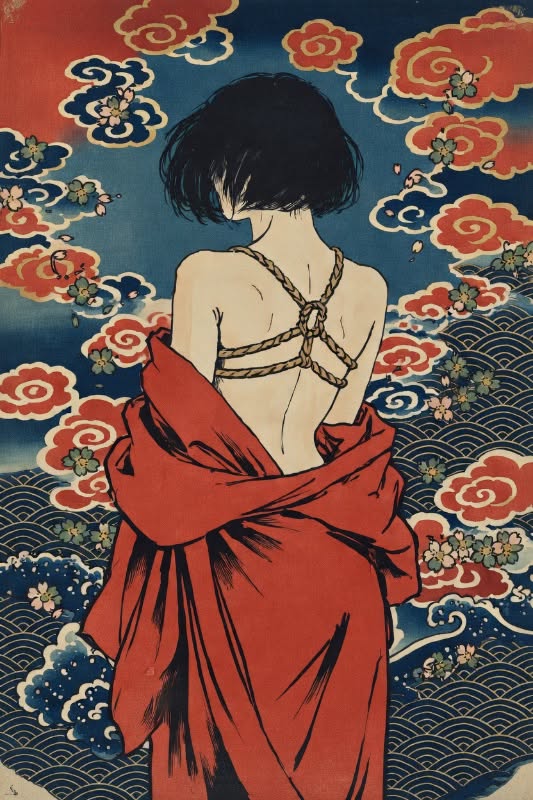
Shinju in Red
赤い真珠
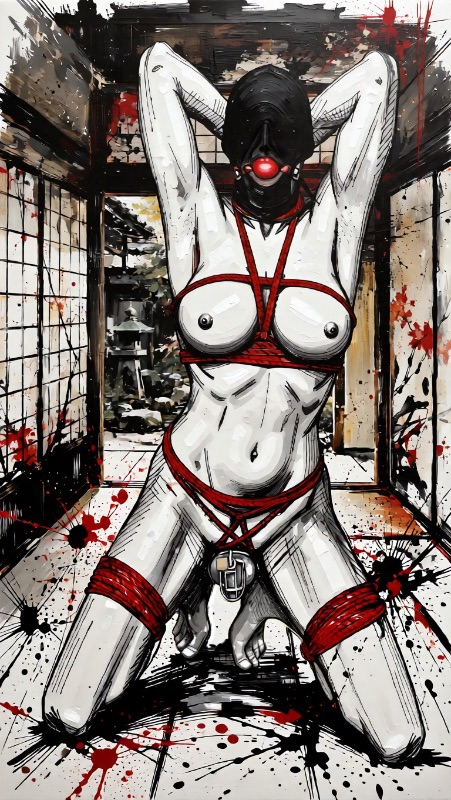
Waiting for Her
彼女を待っています
Blossom and Crane
桜鶴
Batgirl
バットガール
Utsubuse Fuji
うつ伏せ富士

Tanuki me in for the night
夜のタヌキ
Kataashi no negatte iru
片足の願っている
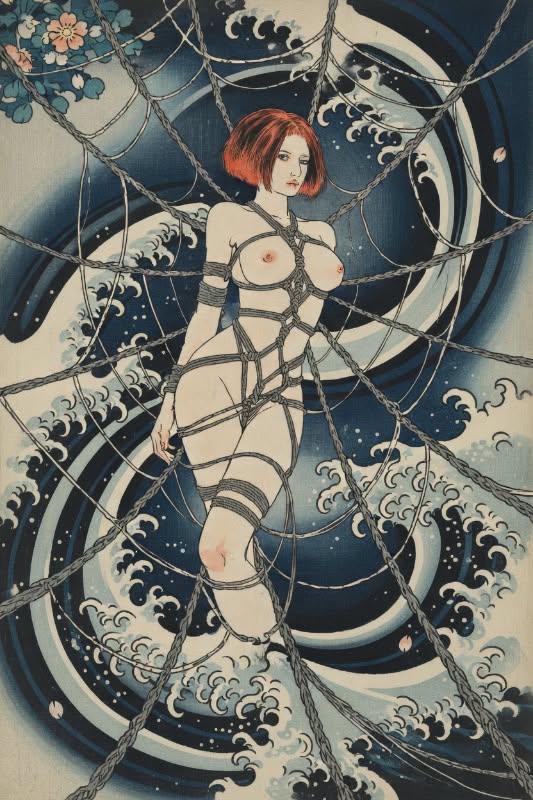
Shibari oki nami ura
縛り川沖浪裏
The web we weave
私たちが織りなす網
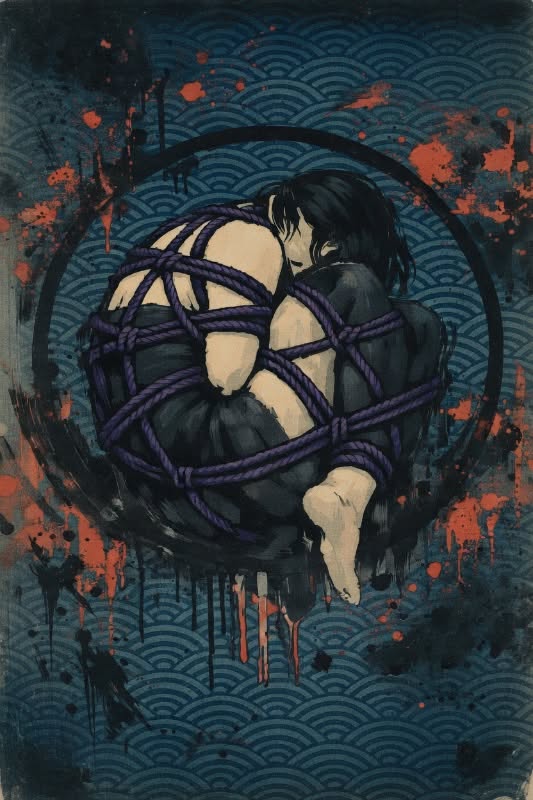
Keep your eyes on the ball
ボールから目を離さない
Shibari in Second Life
Second Life is a great place to begin an exploration of shibari. There are a handful of places you can visit, and some equipment you can buy, that allow you to learn more about shibari and its different forms.
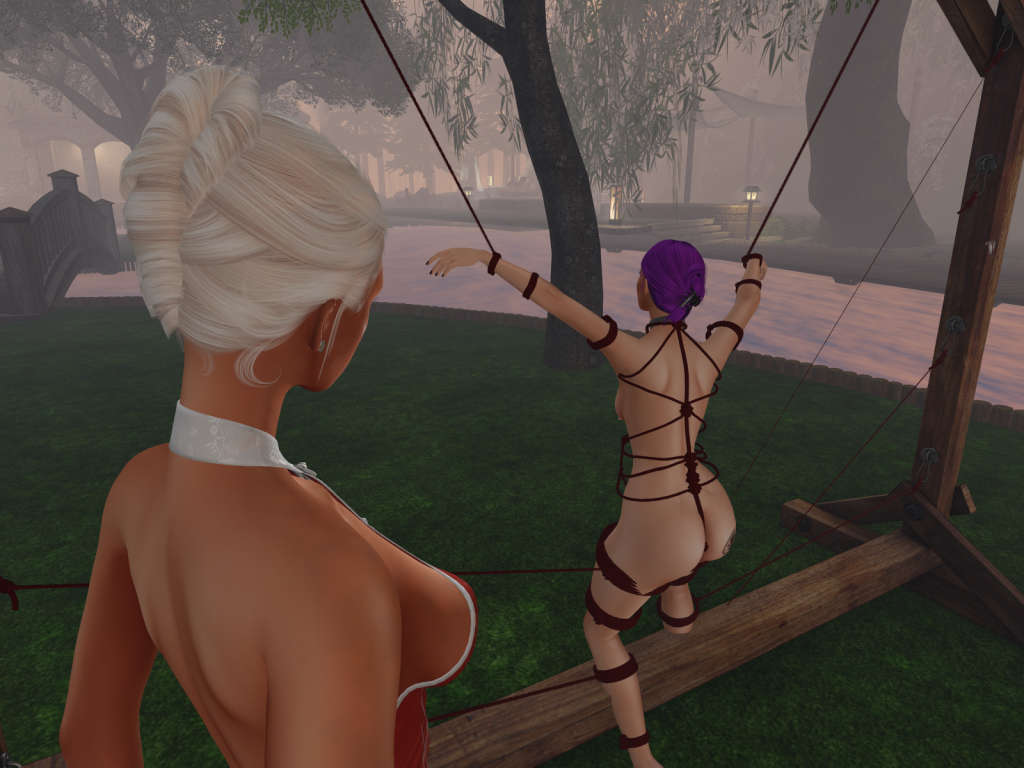
Blackwater Shibari
At Blackwater, Steph is in a karada and suspended by a handful of single columns. Alli watches her struggle with approval.
Blackwater is a good place to start your shibari exploration. Blackwater has a shibari dojo with various equipment you can try, and knowledgeable people who are happy to help and play.
Start at the Blackwater Shibari Dojo. The dojo is located in a quiet spot where you can try out the equipment and get help if you need it. You can also check out the in-world version of this shibari exhibit at the Blackwater Gallery.
If you are looking for good shibari equipment in Second Life, check out Stockholm & Lima. The store has a decent selection of shibari furniture, and a handful of rope harnesses for different body types. The in-world store is here, and the Marketplace store is here. If you are looking for some equipment that’s a little more sexual, Sadiana has an array of shibari furniture that you might enjoy. The Sadiana in-world store is here and the Marketplace store is here. You can try out and use both Stockholm and Sadiana equipment at Blackwater.
Of course, shibari in Second Life lacks the tactile “feel” of shibari; for example, the physical sensation of rope. (Also, the shibari equipment in Second Life is often woefully inept when it comes to the names of poses and other technical aspects of shibari.) However, Second Life can be a wonderful and safe place to explore the art of shibari and to make friends who share your interest.
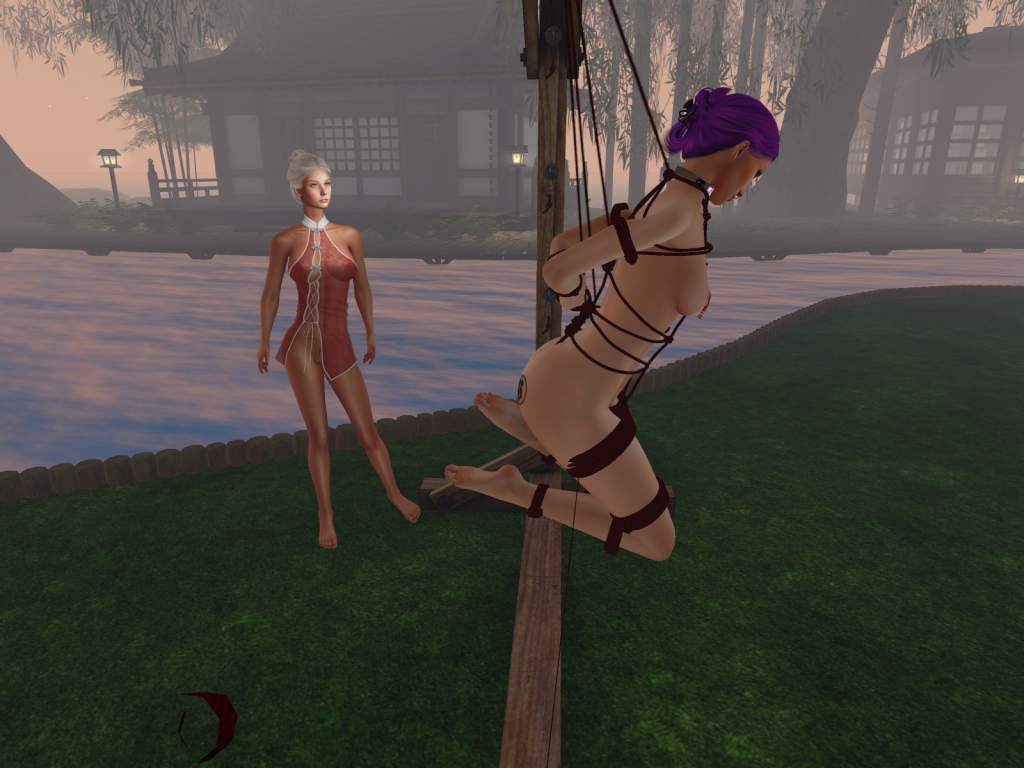
Poor Steph is stuck in a suspension involving a takate kote and a futomomo on each leg.
Safety Considerations
First, always make sure that you and your partner practice consensual activities that you both fully understand, discuss and evaluate before, during and after you practice shibari. Communication is key. Talk to each other and make sure you both understand what you are doing and consent to doing with each other. Check in with each other constantly.
Second, always use high quality equipment. Inspect your rope to make sure that it’s safe, that it is not fraying or stretching, and that it is not dirty or moldy prior to use. If you are thinking about suspensions, please find a construction or engineer friend to verify the correct load limits on any suspension points you are about to use.
Third, take a good long time to learn and appreciate the various nerve points and major blood vessels and arteries in the body. Learn where you can and can’t apply pressure. Read the safety materials — like this one at The Duchy — and then read them again.
Fourth, common sense. Use it. If you don’t have it, don’t do shibari (or anything else, for that matter).
Some Final Thoughts
How to Get Started
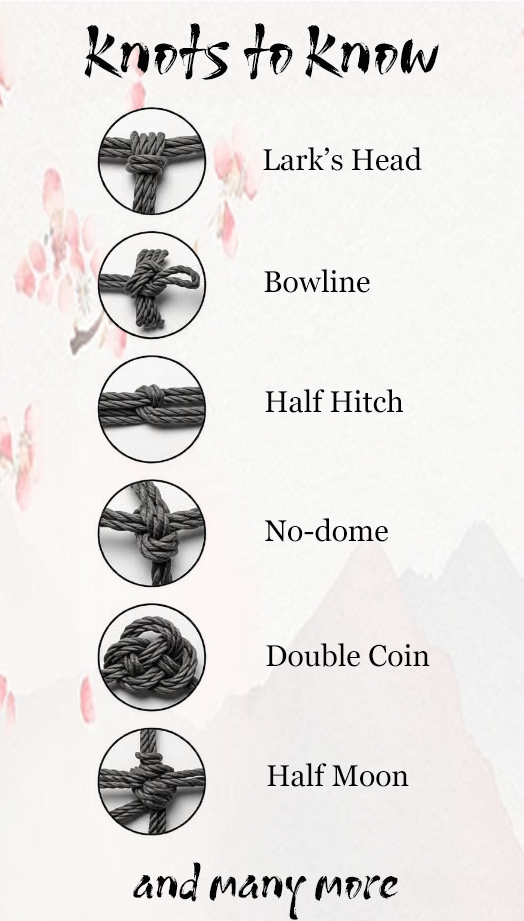
Shibari starts with a piece of rope and learning how to tie various knots. The knots pictured here on the left are some of the more basic knots that you will learn in your shibari practice.
These look tricky, but with a little practice they are all easy to learn and manage.
There is often more than one way to accomplish a tie. For example, the bowline and the lark’s head are both excellent for single-column ties.
For more information on specific knots and how to tie them, check out the Shibari Academy Basic Knots Page, or the Encyclopaedia of Shibari Knots, or the excellent video and picture tutorials at The Duchy.
You will also need some rope. For more on what type of rope to use, check out the rope buyer’s guide at The Duchy or the excellent resources at Twisted Monk.
Your Shibari Style
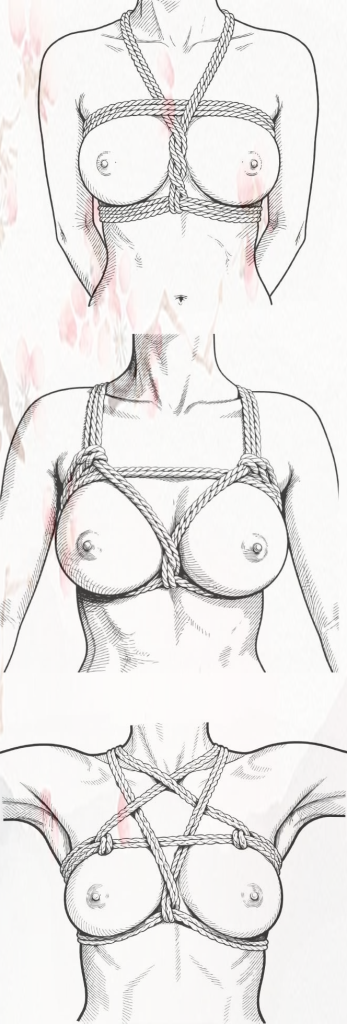
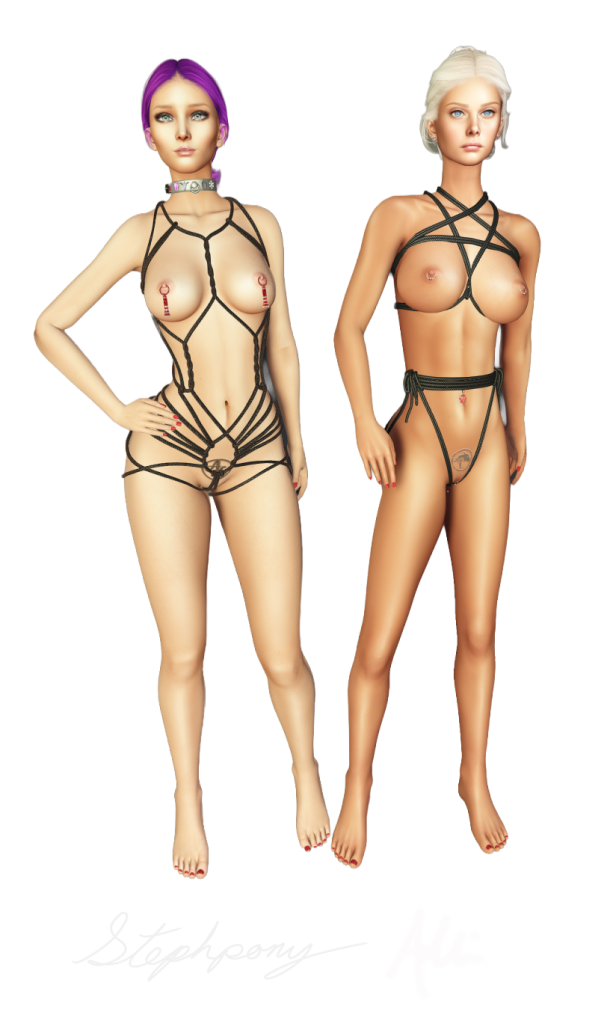
One of the best things about shibari, like all art, is the variation in style. Each of the pictures on the right is a shinju (a chest harness). In shibari, as in life and art, there is more than one way to do most things.
You will find plenty of experts and teachers who profess a “correct” way to do things. Don’t be fooled. Always listen for good advice, but with the understanding that shibari is an art form in which there are a wide range of styles. These are all shinjus pictured here. They are all “correct.”
In the end, the only “correct” form of shibari is the form that is both safe and fun for you and your partner. Experiment, learn, have fun and be safe. Find your own style and enjoy!
Why Shibari?
If you’re interested in shibari, either as an observer or a participant, you should wonder why. What is it about this stuff that makes it interesting or fun to you? Is it the feel of the rope on your skin? Is it the beauty of the poses? Is it the sexuality or eroticism of the restrained bodies? There are no right or wrong answers here, only great questions that — like all art — may offer introspection or insight into who you really are. Here are some thoughts that we have on why shibari is so fun for us:
“That moment when a bottom surrenders to the art of my rope and I watch them go someplace magical”
– Winnie Sweetwater
“The emotional intimacy that develops through shibari is profound. By engaging in this practice, partners build a foundation of trust that transcends words. For many, shibari becomes a way to cultivate emotional closeness while learning to respect each other’s limits and boundaries, creating a supportive and empowering dynamic. Beyond its relational benefits, shibari is a form of self-expression and creativity that can be deeply therapeutic and even spiritual. At its core, shibari is an art form.”
– Joshua Thomas
“Helpless loss of control, bound in security and care that connects you through rope.”
– Stephpony
“Bondage + yoga = shibari = yes.”
– Alli Eberdene
Thank You
All the artwork you see here is the original creation of the amazingly talented Stephpony. Steph made all the art you see on this page. Alli mostly sat back, ate cookies and occasionally gave instructions.
We had a ton of fun making this exhibit. We are learning shibari ourselves, so for us, this exhibit is both a chance to explore shibari to share our experience with you. We are not experts — we just love this stuff and we want to learn more.
We hope you enjoyed the exhibit. If you want to learn more with us, reach out to us any time. Thank you for visiting.
Terms & Conditions
By entering or viewing any area in the Blackwater website, you certify, under penalty of perjury, all of the following:
- You meet the legal age requirement in the locality, city, town, county, state, province, country or other community to which you belong. You do not live in the states of Tennessee, Utah, North Carolina, Kentucky or Florida.
- You are fully able and competent to enter into the terms, conditions, obligations, affirmations, representations, and warranties set forth in these Terms & Conditions, and to abide by and comply with these Terms & Conditions.
- We reserve the right to amend these Terms & Conditions at any time and without notice, and it is your responsibility to review these Terms & Conditions for any changes. Your use of this website following any amendment of these Terms & Conditions will signify your assent to and acceptance of its revised terms.
- You acknowledge that you are entering an ADULT ONLY Internet site. Any material you download from this site or any techniques you learn here are for your own personal use, you will not show any such thing to a minor. You will not allow any minor access to this site or any material found herein.
- You understand that this site contains “Adult Material of an Extreme Nature”, including subject matter which might be described as “Fetish”, “Bondage”, “Sadomasochism”, “BDSM” or “Sexual Activity”.
- That the viewing, reading, and/or downloading of such material from this online service, whether deemed pornographic, obscene or prejudiced by acts of law in some localities, does not violate any laws or community standards of your locality, city, town, county, state, province, country or other community to which you belong.
- You are wholly liable for any false disclosures and responsible for any legal ramifications that may arise from the viewing, reading, or downloading of images, information or material contained within this service.
- You hereby waive any legal or equitable rights or remedies you have or may have against the creators of this website by using this website and agree to indemnify, defend, and hold harmless the creators of this website, producers, models, sponsors, web sites, officers, directors, employees, agents, successors and assigns and Internet service providers against any and all claims that may arise as a result of fraudulent entry or illegal or unsafe use of this online service and materials contained therein. This defense and indemnification obligation will survive these Terms of Service and your use of the Websites. You agree that we shall have the sole right and obligation to control the legal defense against any such claims, demands, or litigation, including the right to select counsel of our choice and to compromise or settle any such claims, demands, or litigation.
- Educational material provided on this web site is provided solely as an addendum to practical hands on experience and open consent and communication between adults.
- You understand and accept responsibility for your own actions, thus releasing the creators of this web site, the materials herein and the service providers from all liability, including but not limited to injuries, accidents or trauma of any kind, be it emotional or physical, that may occur from any interpretation and / or actualization of the procedures or materials contained herein.
- You are not a U.S. postal official or any other law enforcement agent and you do not act as an agent thereof. You are not attempting to obtain evidence for the prosecution of an individual, organization or corporation or for the purposes of prosecution or entrapment. You have not notified the postal service or any other agency governmental or otherwise to intercept sexually explicit material.
- You agree that pictures depicting people restrained in any manner and/or beaten, spanked, whipped or engaged in any other activity that can be labeled as sado-masochistic (S&M), bondage, BDSM or other sexual activities are not obscene or offensive in any way. In addition, you do not believe that such material could be considered obscene or offensive and that we are not acting in any way to send you this information, that you actively sought out this material and you willingly choose to view and/or use it.
- We may terminate your access to the website, without cause or notice, which may result in the forfeiture and destruction of all information associated with your account. All provisions of this Agreement that, by their nature, should survive termination shall survive termination, including, without limitation, ownership provisions, warranty disclaimers, indemnity, and limitations of liability.
- These terms and conditions are governed by the laws of the United States of America and the laws of the State of Colorado. Any claims made must be brought in the Denver District Court.
- You represent and warrant that you have read the above legal warning in its entirety, that you have the right, authority, and capacity to enter into this Agreement and to abide by all of its terms and conditions, that you are of legal age (at least 18-years old in the U.S.), and that you are not prohibited by law from using this site. You affirm and attest that no portion of the content or material in this site is a violation of the law or community standards (including obscenity standards) of your locality, city, town, county, state, province, country or other community to which you belong.
Disclaimers
YOU USE THE WEBSITES AT YOUR SOLE RISK. WE PROVIDE THE WEBSITES “AS IS” AND “AS AVAILABLE”. TO THE FULLEST EXTENT PERMITTED BY LAW, THE WEBSITES, THEIR SITE OPERATOR, AND THEIR RESPECTIVE OFFICERS, DIRECTORS, EMPLOYEES, AND AGENTS DISCLAIM ALL WARRANTIES OF ANY KIND RELATED TO THE WEBSITES AND GOODS OR SERVICES PURCHASED AND OBTAINED THROUGH THE WEBSITES, WHETHER EXPRESS OR IMPLIED, INCLUDING, BUT NOT LIMITED TO, THE IMPLIED WARRANTIES OF MERCHANTABILITY, FITNESS FOR A PARTICULAR PURPOSE, AND NON-INFRINGEMENT. YOU WILL BE SOLELY RESPONSIBLE FOR ANY DAMAGE TO YOUR COMPUTER SYSTEM OR LOSS OF DATA THAT RESULTS FROM YOUR USE OF THE WEBSITES. WE MAKE NO WARRANTY OR REPRESENTATION ABOUT THE ACCURACY OR COMPLETENESS OF THE WEBSITES’ CONTENT OR THE CONTENT OF ANY SITES LINKED TO THE WEBSITES OR THAT THE WEBSITES WILL MEET YOUR REQUIREMENTS AND ASSUME NO LIABILITY OR RESPONSIBILITY FOR ANY (I) ERRORS, MISTAKES, OR INACCURACIES OF CONTENT, (II) PERSONAL INJURY OR PROPERTY DAMAGE, OF ANY NATURE WHATSOEVER, RESULTING FROM YOUR ACCESS TO AND USE OF THE WEBSITES OR OUR SERVICES, (III) ANY UNAUTHORIZED ACCESS TO OR USE OF OUR SECURE SERVERS AND/OR ANY AND ALL PERSONAL INFORMATION AND/OR FINANCIAL INFORMATION STORED THEREIN, (IV) ANY INTERRUPTION OR CESSATION OF TRANSMISSION TO OR FROM THE WEBSITES OR OUR SERVICES, (IV) ANY BUGS, VIRUSES, TROJAN HORSES, OR THE LIKE WHICH MAY BE TRANSMITTED TO OR THROUGH THE WEBSITES OR OUR SERVICES BY ANY THIRD PARTY, AND/OR (V) ANY ERRORS OR OMISSIONS IN ANY CONTENT OR FOR ANY LOSS OR DAMAGE OF ANY KIND INCURRED AS A RESULT OF THE USE OF ANY CONTENT POSTED, EMAILED, TRANSMITTED, OR OTHERWISE MADE AVAILABLE VIA THE WEBSITES OR OUR SERVICES. THE WEBSITES DO NOT WARRANT, ENDORSE, GUARANTEE, OR ASSUME RESPONSIBILITY FOR ANY PRODUCT OR SERVICE ADVERTISED OR OFFERED BY A THIRD PARTY THROUGH THE WEBSITES OR OUR SERVICES OR ANY HYPERLINKED SERVICES OR FEATURED IN ANY BANNER OR OTHER ADVERTISING, AND, THE WEBSITES WILL NOT BE A PARTY TO OR IN ANY WAY BE RESPONSIBLE FOR MONITORING ANY TRANSACTION BETWEEN YOU AND THIRD-PARTY PROVIDERS OF PRODUCTS OR SERVICES. AS WITH THE PURCHASE OF A PRODUCT OR SERVICE THROUGH ANY MEDIUM OR IN ANY ENVIRONMENT, YOU SHOULD USE YOUR BEST JUDGMENT AND EXERCISE CAUTION WHERE APPROPRIATE.
NO INFORMATION OBTAINED BY YOU FROM US OR THROUGH THE WEBSITES SHALL CREATE ANY WARRANTY NOT EXPRESSLY STATED IN THESE TERMS.
Limitation of Liability
IN NO EVENT SHALL THE WEBSITES, THEIR SITE OPERATOR, AND THEIR RESPECTIVE OFFICERS, DIRECTORS, EMPLOYEES, OR AGENTS, BE LIABLE TO YOU FOR ANY DIRECT, INDIRECT, INCIDENTAL, SPECIAL, PUNITIVE, OR CONSEQUENTIAL DAMAGES WHATSOEVER RESULTING FROM ANY (I) ERRORS, MISTAKES, OR INACCURACIES OF CONTENT, (II) PERSONAL INJURY OR PROPERTY DAMAGE, OF ANY NATURE WHATSOEVER, RESULTING FROM YOUR ACCESS TO AND USE OF OUR WEBSITES OR SERVICES, (III) ANY UNAUTHORIZED ACCESS TO OR USE OF OUR SECURE SERVERS AND/OR ANY AND ALL PERSONAL INFORMATION AND/OR FINANCIAL INFORMATION STORED THEREIN, (IV) ANY INTERRUPTION OR CESSATION OF TRANSMISSION TO OR FROM OUR WEBSITES, (IV) ANY BUGS, VIRUSES, TROJAN HORSES, OR THE LIKE, WHICH MAY BE TRANSMITTED TO OR THROUGH OUR WEBSITES OR SERVICES BY ANY THIRD PARTY, (V) ANY ERRORS OR OMISSIONS IN ANY CONTENT OR FOR ANY LOSS OR DAMAGE OF ANY KIND INCURRED AS A RESULT OF YOUR USE OF ANY CONTENT POSTED, EMAILED, TRANSMITTED, OR OTHERWISE MADE AVAILABLE VIA OUR WEBSITES OR SERVICES, AND/OR (VI) INTERACTIONS YOU HAVE WITH THIRD-PARTY ADVERTISEMENTS OR SERVICE PROVIDERS, OR THIRD-PARTY SITES, FOUND ON OR THROUGH THE WEB SITES, INCLUDING PAYMENT AND DELIVERY OF RELATED GOODS OR SERVICES, AND ANY OTHER TERMS, CONDITIONS, POLICIES, WARRANTIES OR REPRESENTATIONS ASSOCIATED WITH SUCH DEALINGS, WHETHER BASED ON WARRANTY, CONTRACT, TORT, OR ANY OTHER LEGAL THEORY, AND WHETHER OR NOT THE WEBSITES OR THEIR SITE OPERTOR ARE ADVISED OF THE POSSIBILITY OF SUCH DAMAGES. THE FOREGOING LIMITATION OF LIABILITY SHALL APPLY TO THE FULLEST EXTENT PERMITTED BY LAW IN THE APPLICABLE JURISDICTION.
YOU SPECIFICALLY ACKNOWLEDGE THAT THE WEBSITES SHALL NOT BE LIABLE FOR CONTENT OR THE DEFAMATORY, OFFENSIVE, OR ILLEGAL CONDUCT OF ANY THIRD PARTY, AND THAT THE RISK OF HARM OR DAMAGE FROM THE FOREGOING RESTS ENTIRELY WITH YOU.
YOU FURTHER ACKNOWLEGE THAT ANY CONTENT UPLOADED TO THE SITE MAY BE VIEWED, DOWNLOADED, REPUBLISHED, AND DISTRIBUTED – POTENTIALLY IN VIOLATION OF YOUR RIGHTS OR THIS AGREEMENT – AND THAT YOU ASSUME SUCH RISKS AS A MATERIAL PART OF THESE TERMS OF SERVICE.
YOU AGREE NOT TO FILE ANY LAWSUIT OR PROCEEDING INCONSISTENT WITH THE FOREGOING LIABILITY LIMITATIONS.
Any claim by you that may arise in connection with these Terms of Service will be compensable by monetary damages, and you will in no event be entitled to injunctive or other equitable relief.